


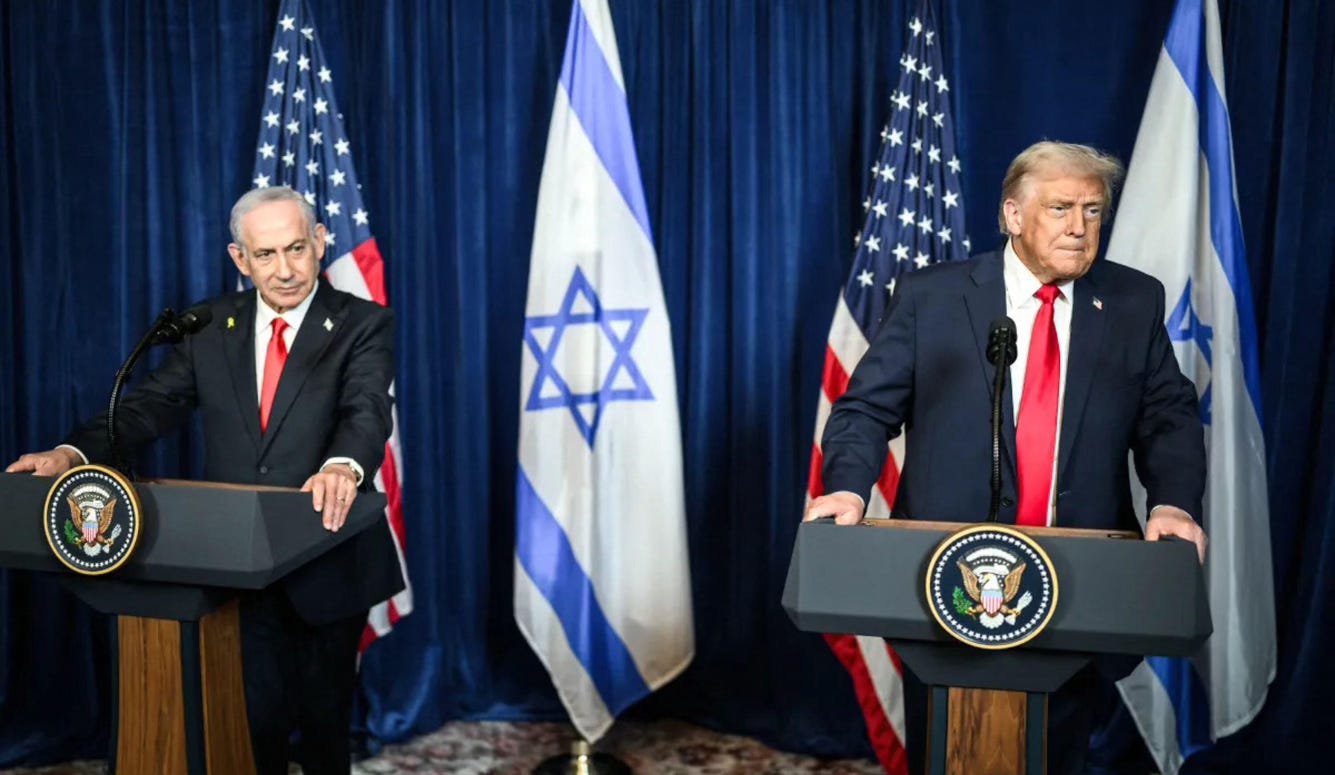
On 29 December, in front of reporters and the general public, Prime Minister Benjamin Netanyahu and President Donald Trump praised each other fulsomely and made a display of their mutual affection and of Israeli–American solidarity. Trump publicly endorsed Israel’s firm stance against Iran, giving the Israelis a green light to attack Iranian sites if the Islamic Republic renewed its nuclear weapons and ballistic missile programs. But off-stage, the deep divisions between the American and Israeli positions over the future of Gaza and other areas in the Middle East have only been papered over and remain in great measure unresolved.
Initially, Netanyahu requested that the implementation of Phase 2 of Trump’s twenty-point Gaza peace plan be delayed until Hamas release the remains of Ran Gvili, the lone Israeli hostage from the 7 October 2023 Hamas assault on southern Israel whose corpse remains in Palestinian hands. When they accepted the peace plan last October, Hamas agreed to hand over all the remaining hostages, both alive and dead, in exchange for several thousand Palestinian prisoners and for Israel’s agreement to a ceasefire. The ceasefire went into effect but Hamas has failed to hand over Gvili’s remains, arguing that it cannot locate them. Whether or not Trump believes this statement is untrue, he ruled that this should not delay the start of Phase 2—despite Netanyahu’s stratagem of bringing Gvili’s parents with him to Mar a Lago to meet the president in the hope that they might influence his decision.
So, Netanyahu has grudgingly agreed to start Phase 2 later this month and—more significantly—that this can go ahead although Hamas has still not disarmed, a stipulation to which the terrorist organisation had also agreed. Hamas has been reorganising and re-equipping its formations and reasserting its control over the two million or so Palestinian inhabitants who live in the 47 percent of the Strip it governs. The group has insisted that it will not give up its arms, which, according to Israel, consist mainly of 60,000 Kalashnikov assault rifles, alongside an unknown number of RPGs, a few hundred short-range rockets, and a variety of IEDs. Until last week’s Netanyahu–Trump meeting, Israel had been insisting that Phase 2 could not begin until Hamas disarmed.

