

A Man for All Seasons
Susan Owens’s handsome new monograph reconsiders the life and career of the English landscape painter John Constable.

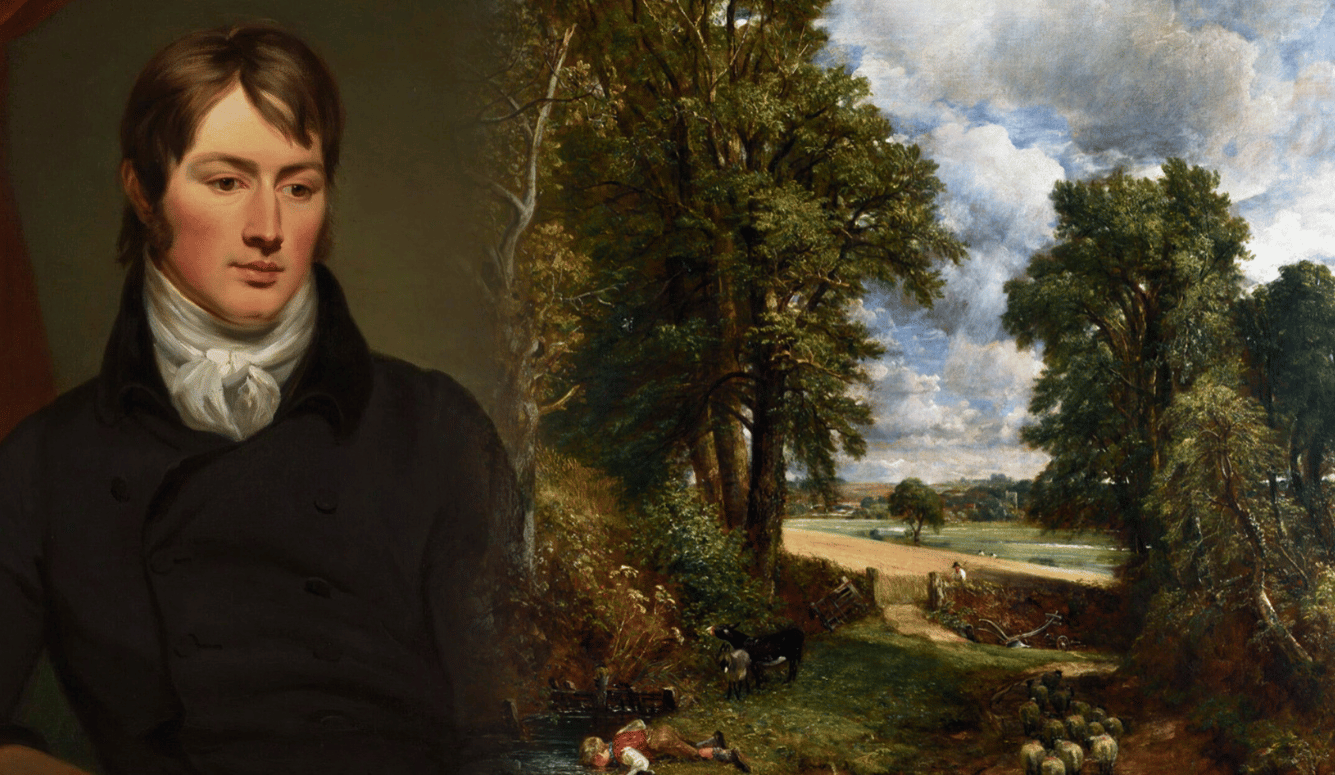
A review of Constable’s Year: An Artist in Changing Seasons by Susan Owens; 223 pages; Thames & Hudson (January 2026)
John Constable was born two and a half centuries ago on 11 June 1776, and to mark the occasion, Thames & Hudson has published a handsome new monograph on the artist, replete with prints of his paintings. Constable’s Year by Susan Owens is divided into four sections: Spring, Summer, Autumn, and Winter. This structure is a bit of a gimmick, and it means the story has to jump around a lot, hopping from scenes of Constable’s youth to his late-life and then back again in the space of just a few pages. Nevertheless, Constable’s work was deeply connected to the seasons, so the theme is hardly arbitrary. Nearly all his pictures are set during spring and summer, his favourite time of the year for painting alfresco. Unfortunately, this was also when the Royal Academy held its annual exhibition, which forced him to travel into London when he most wanted to be traipsing through the English countryside. “Mill dams ... Willows, Old rotten Banks, slimy posts, & brickwork. I love such things,” he explained. “As long as I do paint I shall never cease to paint such Places. They have always been my delight.”
These days, Constable is generally considered a conservative painter. In part, that’s due to his politics, which were quite conservative. He was a staunch royalist who loathed reform, trade unions, and elected representatives of all stripes. “I hate the Whigs, but the Tories have done the greatest mischief, for it was they that passed the Catholic bill,” he complained in 1836. “Almost all the world is ignorant & vulgar.” Modern critics have sometimes tried to read such sentiments into his paintings, as John Barrell did in his 1980 book, The Dark Side of the Landscape, which accused Constable of being an apologist for the British class system:
The only figures he paints are those of the labouring poor, and there are not many of them. ... It was necessary for him to reduce his figures until they merge insignificantly with the landscape, to distance them, and even when they are in the foreground to paint them as indistinctly as possible, to evade the question of their actuality.
Mostly, though, it’s Constable’s subject matter that gets him tagged as a traditionalist. His paintings are windows into a lost world, before the countryside was sullied by highways and high-tension wires. It’s his rival J.M.W. Turner who’s seen as the great innovator of the age. The men were opposites in almost every regard. Turner was a committed bachelor; Constable was a devoted family man. Turner traveled all over the Continent; Constable never left England. Turner’s paintings are like stills from disaster movies; Constable’s landscapes look comparatively staid.

 | A guest post by
|