



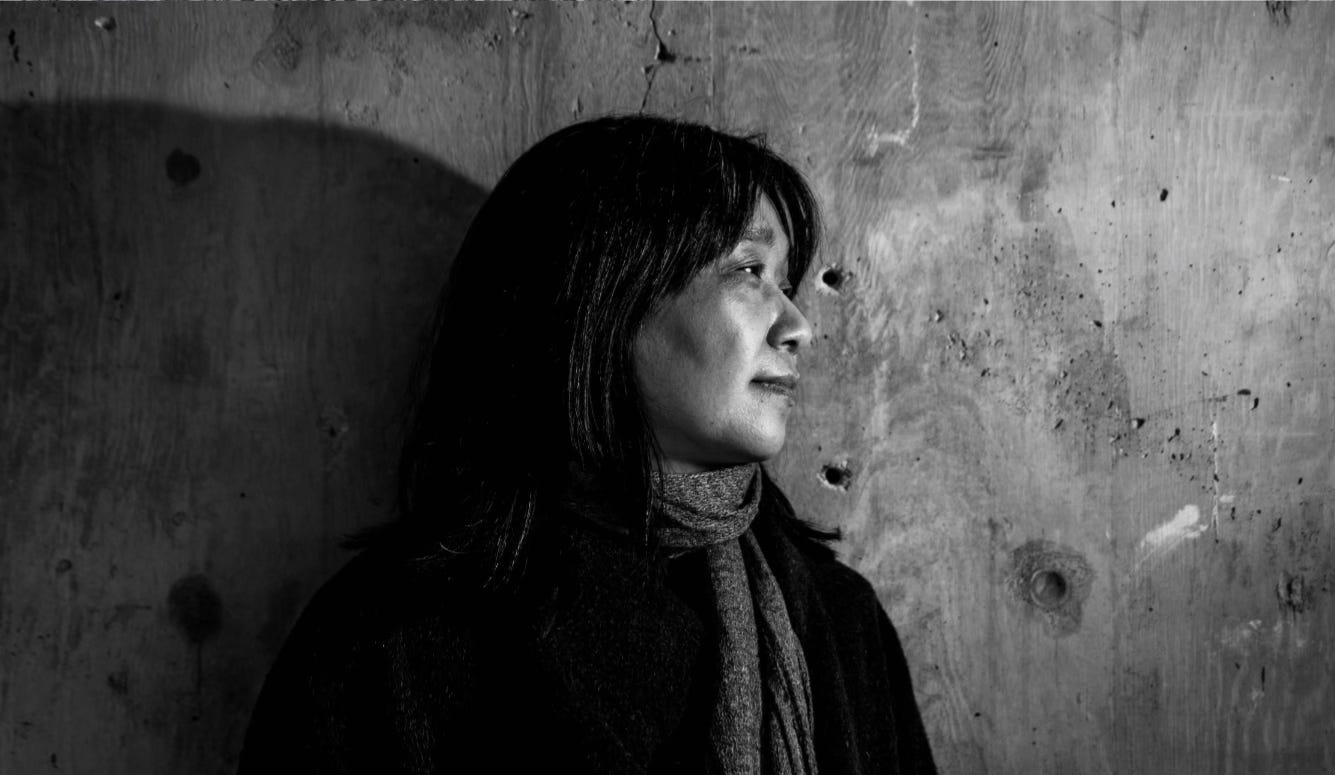
A review of We Do Not Part by Han Kang, 272 pages, Hogarth (February 2025)
“Here they come,” wrote Kingsley Amis of Colin Wilson’s debut book, the bold existentialist anthology, The Outsiders, “tramp, tramp, tramp—all those characters you thought were discredited, or had never read, or (if you are like me) had never heard of: Barbusse, Sartre, Camus, Kierkegaard, Nietzsche, Hermann Hesse, Hemingway, Van Gogh, Nijinsky, Tolstoy [and] Dostoevsky.”
This was textbook Amis. As a critic, novelist, and individual, he was a provocateur of a self-styled anti-highbrow stripe. His fellow Cambridge don in the 1960s, F.R. Leavis, is said to have called Amis a “pornographer” for his persistent low-browism, while British film critic and director Lindsay Anderson observed that Amis would “rather pose as a philistine than run the risk of being despised as an intellectual.” But Amis’s “cultivated philistinism”—his feigned ignorance of the canon and eagerness to scorn his own literary training—was more than mere schoolboy mischief. While habitually sticking his tongue out at high society, Amis was, at his best, making a literary point.
Amis’s style of criticism was colloquial, accessible, and did not require prior knowledge of literary theories or esoteric texts. As John McDermott wrote in his introduction to The Amis Collection, novelists (like the English Victorians) “trying to tell interesting stories about understandable characters in a reasonably straightforward style” were, in Amis’s view, successful. On the other hand, those—particularly the Modernists—who cultivated artistic detachment via obscurity, complexity, and other barriers to reasonable comprehension were merely fencing off their literary property or demonstrating their membership of a clique. This was just a kind of snobbery, Amis believed—the literary equivalent of accents, complicated table manners, and what-have-you.
I thought of Amis as I read We Do Not Part, a 2021 novel by South Korean author Han Kang, republished in English translation this month. In literary circles, Kang is admired and rewarded for the kind of obscurantist sophistication that Amis disdained. She was last year’s Nobel laureate, but she first drew international acclaim with the publication of her 2015 novel, The Vegetarian, which won the Booker the following year. My misgivings about her style notwithstanding, Kang is an impressive and imaginative writer. She stretches quotidian premises to breaking point, condemning her unfortunate characters to inordinate suffering. The worlds she creates are surreally off-kilter, but they retain enough familiarity to be morbidly unsettling—The Vegetarian, for instance, is the story of a pliant woman violently shunned by her husband and family for giving up meat.
In We Do Not Part, the simple act of describing a dream to a friend is causally linked to the severing of fingers and a life-threatening voyage, first through a blizzard, then through space, time, collective memories, multigenerational trauma, and the like. The main action begins when Kyungha, an emotionally troubled writer living in Seoul, visits her longtime friend Inseon in hospital. Inseon, a filmmaker-turned-carpenter, has sliced off her fingers while felling trees to construct an elaborate movie set from Kyungha’s dream. Bedridden in hospital and in need of constant medical care, Inseon asks her friend to travel to her remote mountaintop home on Jeju Island to feed her pet bird, Ama.
Weak from delirium, Kyungha does not have the strength to refuse this request. She flies from Seoul to Jeju, where she journeys into the heart of her country’s suppressed history. In the aftermath of the Second World War, Jeju was the site of an uprising against newly imposed martial law, which led to mass executions of alleged communist sympathisers by the South Korean government. As soon as Kyungha arrives on the island, a heavy snowstorm sets in, and history as well as reality is buried beneath obscurity.
Kang is the pre-eminent chronicler of South Korea’s authoritarian 20th century, and she has come to be regarded as her country’s voice of conscience for her exploration of its bloody struggle for democracy. After writing Human Acts—an account of a student uprising and state-sanctioned massacre by the South Korean military in the city of Gwangju, where she grew up—Kang found herself haunted by a recurring dream, in which thousands of black trees on a snow-covered hill were pressed by a rising sea. That vision eventually led her, like her fictional counterpart, to Jeju.
➜ Read the full article at Quillette.com
Note: Quillette maintains its independence through reader subscriptions. You'll need a subscription to access the complete article.

Very well written. Articulated exactly how I felt about one of Kang's other books, Human Acts.