

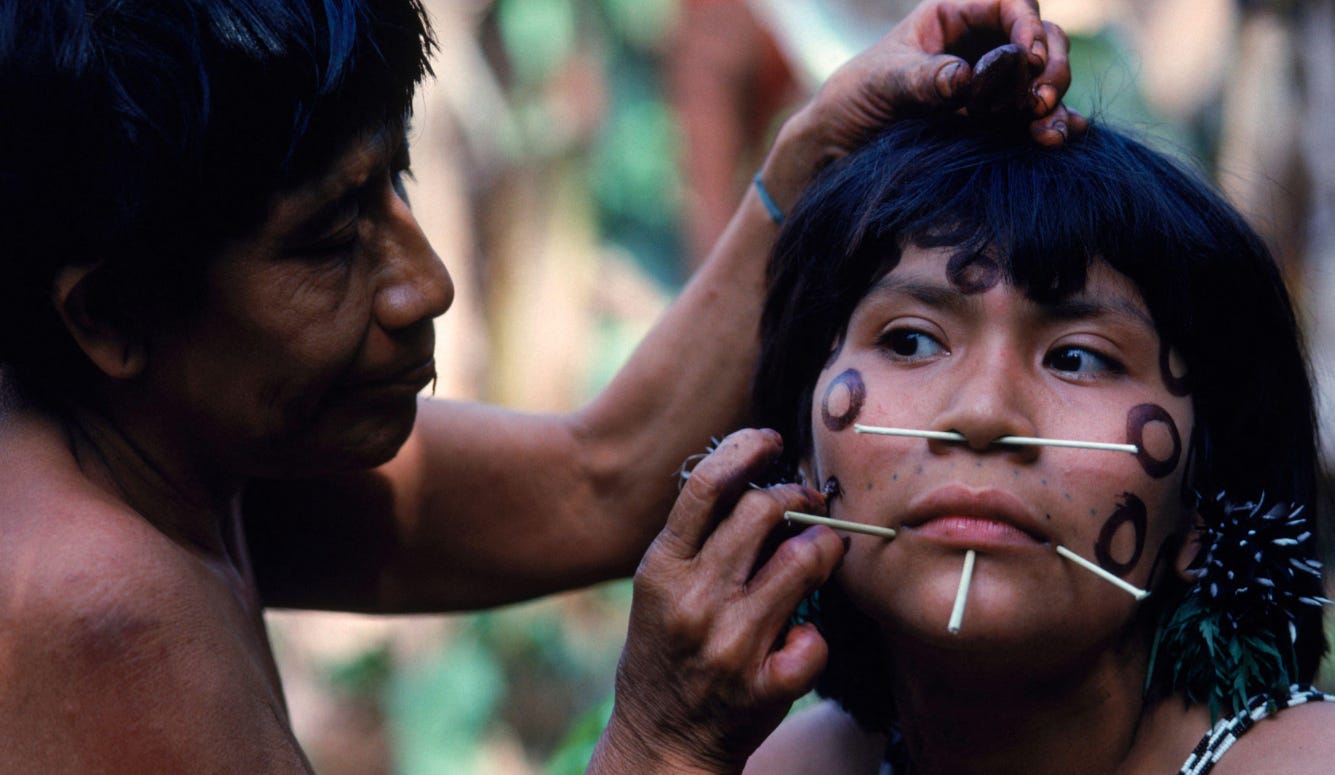
“Do you know what they’ve done to me, even though I’m a leading figure in my field? You’re in France and you want to study sociobiology or behavioural biology? You haven’t even been born yet and you’re already dead. Get out of academic life as fast as you can.”
Napoleon Chagnon wrote those words to me about twenty years ago. I was a student who’d recently become a science journalist, and I was so fascinated by his work that I envisioned pursuing a career that combined anthropology and biology, just like his. I’d written to ask him for help with a bibliography—and also to ask, “How can I become you?” Alongside the references he’d provided, he’d added this comment, like a lifebuoy made of lead. It wasn’t until fifteen years later, when I read historian of science Alice Dreger’s account and realised the full extent of the witch hunt mounted against him, that I finally understood what he’d been trying to tell me.
At first glance, Napoleon Chagnon didn’t seem to have the makings of someone who would become a household name in science. But, as his granddaughter, cinematographer Caitlin Mack, told me, his story makes far more sense when you see it as a tale of a precocious child who came from nothing and had a unique talent for making people jealous.
Born in 1938 in Port Austin, Michigan, into a poverty-stricken Canadian family of twelve children—he was called Napoleon after his grandfather and had a brother who was christened Verdun, further evidence of the family’s Francophilia—Chagnon was able to attend university thanks to his father’s meagre GI pension and to the string of odd jobs he accumulated from adolescence onwards: ambulance driver, land surveyor, labourer, delivery man... His only ambition was to provide for a future wife and children, so he embarked on a degree in physics and engineering. But the few weekly hours humanities in his curriculum changed everything. He fell in love with anthropology—as he details in his autobiography, Noble Savages: My Life Among Two Dangerous Tribes—the Yanomamö and the Anthropologists (Simon & Schuster, 2013).
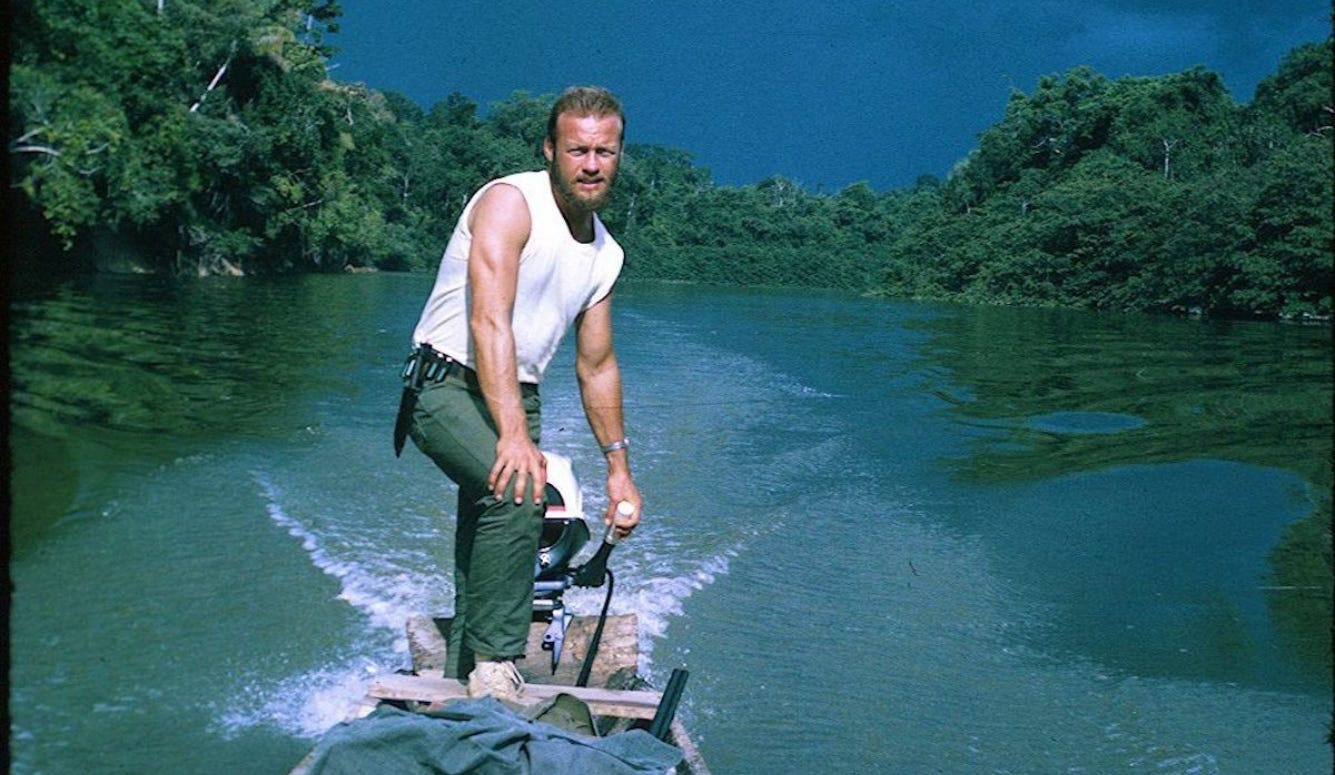
In 1964, while still a doctoral student, Chagnon set out on his first expedition to visit the Yanomamö, a tribe living in the Amazon rainforest, on the border between Venezuela and Brazil. Far from behaving like a mere anthropological tourist, Chagnon settled in, learned the language, and lived with and like them. He was to return to them every year, until this “fierce people” from the legendary Orinoco basin became his adoptive family. He was to undertake nearly thirty expeditions over the course of the following three decades, thus providing a rare window onto a primitive way of life that was tens of thousands of years old.
