

Apocalypse Soon?
Earth Day once helped focus public attention on real environmental problems. Today it is a festival of alarmism, misanthropy, technophobia, and moral theatrics.

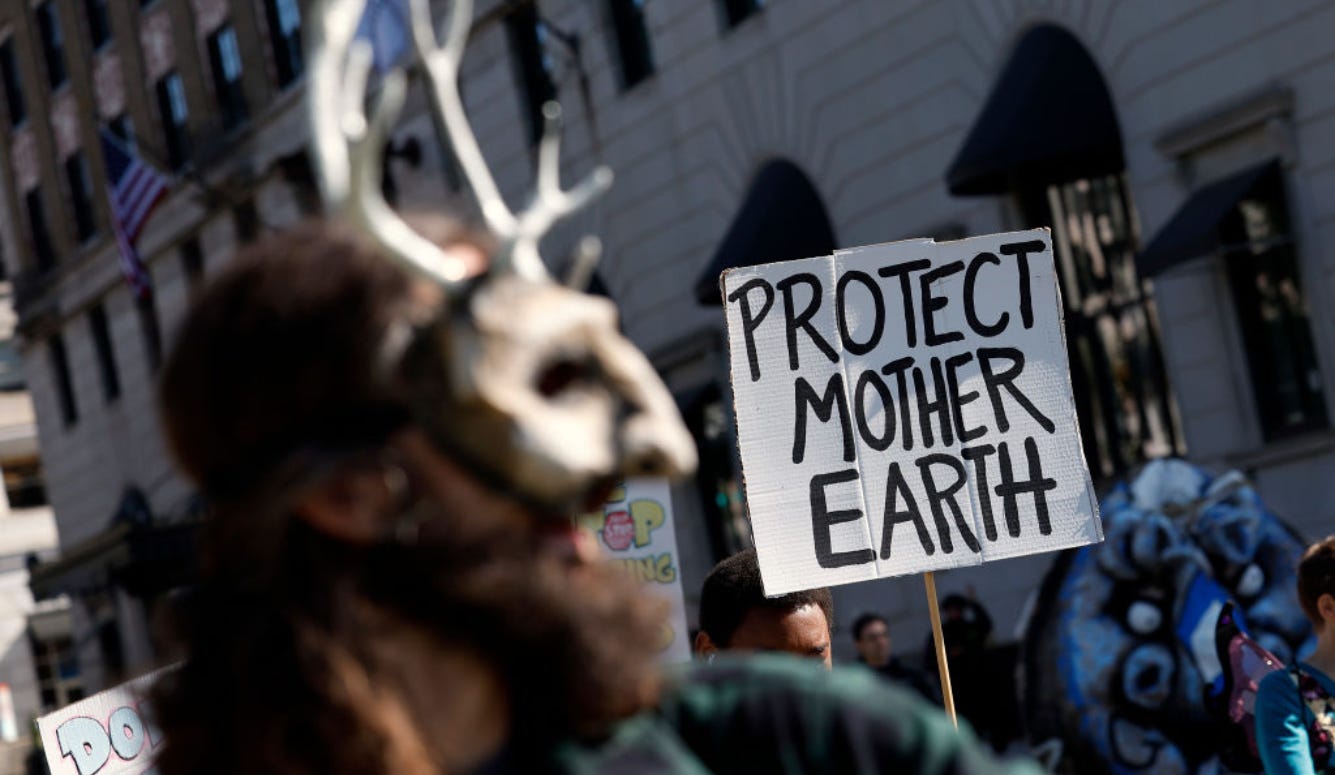
On the eve of last year’s Earth Day, Denis Hayes—one of the original organisers of the first such event—declared:
The world is approaching irreversible tipping points. Rising global temperatures, toxic pollutants, and crashing ecosystems are pushing the planet to the brink of collapse. Yet too many global political leaders are choosing this moment to roll back critical environmental regulations and crush renewable energy sources.
That sounds alarming, but it was a relatively restrained prognosis compared to remarks from organisers in other countries. “We are experiencing an environmental collapse,” declared Greenpeace Argentina’s Agostina Rossi Serra. Not to be outdone, Jane Goodall—an icon in the sustainability community—ominously warned, “I do believe there is a window of time when we can at least slow down climate change and loss of biodiversity. But only if we get together and take action now. And without hope we will fall into apathy and do nothing. Then we are doomed.”
Comments like these are typical of the sweeping, apocalyptic, and morally charged rhetoric common within environmentalist circles. They are also increasingly detached from the practical spirit that animated Earth Day at its inception. The first Earth Day celebration in 1970 was established by Democratic senator Gaylord Nelson of Wisconsin as a nationwide environmental teach-in that reflected the era’s grassroots idealism and countercultural energy. But it was also a serious effort to refocus public attention on pollution, conservation, and public health. Today, the annual event is marked by hyperbole, pessimism, and the denunciation of important technologies.
This year’s Earth Day slogan—“Our Power, Our Planet”—emphasises the importance of collective action, but practical initiatives have been replaced by moral posturing and revolutionary grandstanding. “The first Earth Day,” the website announces, “started an environmental revolution. Now, we are igniting an education revolution to save the planet.” Recommended activities include the reduction of humanity’s “foodprint” (the environmental costs of growing, producing, transporting, and storing our food), but instead of asking how innovation can make agriculture more efficient and less wasteful, activists encourage people to see feeding the world through a lens of guilt and self-denial.

 | A guest post by
|