


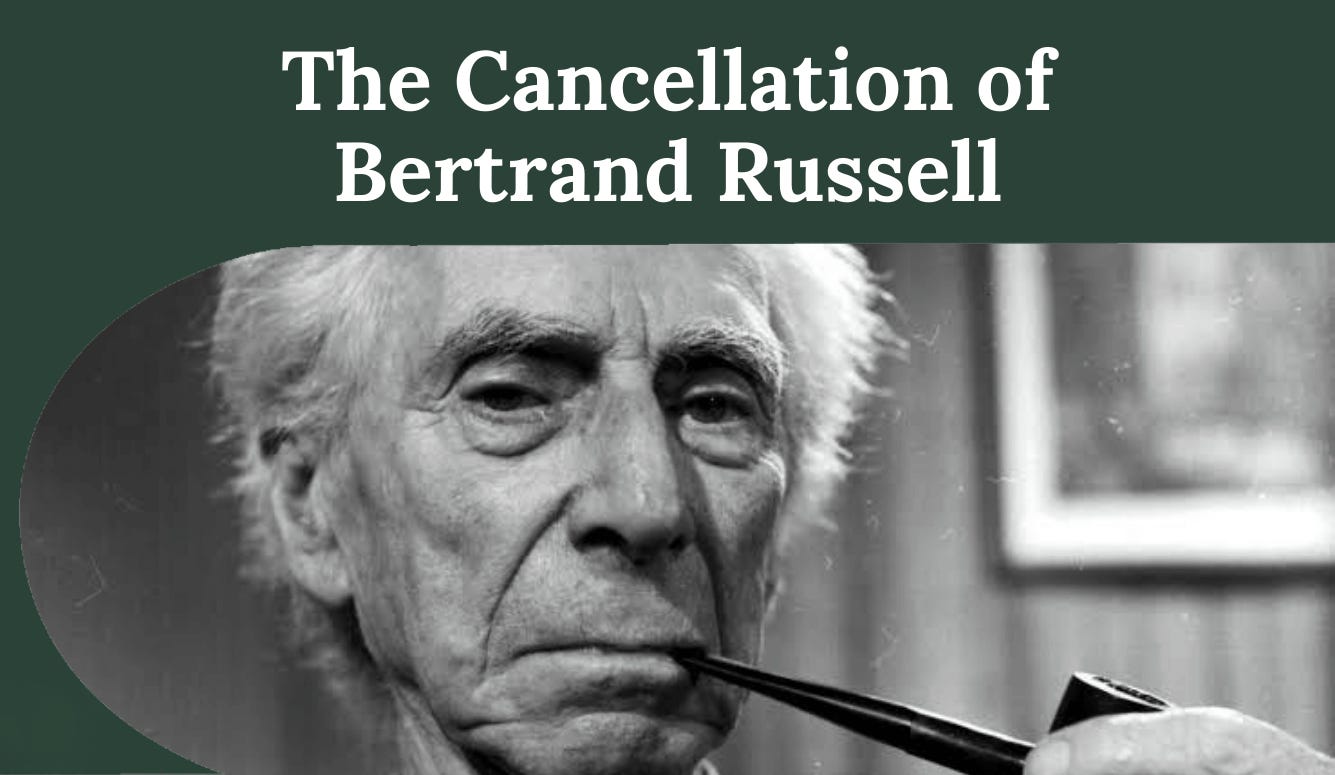
Written by James Huffman, read by William Laing.
In 1940, Bertrand Russell was appointed Professor of Philosophy at the College of the City of New York. Within weeks, a New York judge voided the appointment, declaring that Russell’s writings on religion, sexuality, and marriage rendered him morally unfit to teach. The ruling followed a campaign led by religious conservatives and political actors who portrayed Russell as a threat to public morals.
This video essay revisits the episode in detail: the lawsuit brought by a private citizen, the inflammatory court brief branding Russell “lecherous” and “bereft of moral fiber,” and Justice John E. McGeehan’s decision to revoke the appointment without hearing evidence for the defence. It also examines the principled but ultimately unsuccessful efforts to appeal the ruling, as well as the broad coalition of academics who defended Russell on grounds of free speech and institutional autonomy.
Eight decades later, the issues raised by the Russell case remain unsettled. The boundaries of academic freedom—and the pressures exerted by prevailing moral orthodoxies—continue to shape public life.
Chapters
00:00 Bertrand Russell’s appointment and judicial revocation
01:37 Early life, pacifism, imprisonment, and intellectual development
02:32 Atheism, Why I Am Not a Christian, Marriage and Morals, and public scandal
03:54 Religious opposition and the taxpayer lawsuit
04:50 Justice McGeehan’s ruling and the “chair of indecency”
06:28 Appeals, mayoral intervention, and Russell’s refusal to withdraw
08:03 Academic solidarity and defence of free expression
09:53 Media reaction, further challenges, and contemporary parallels

