



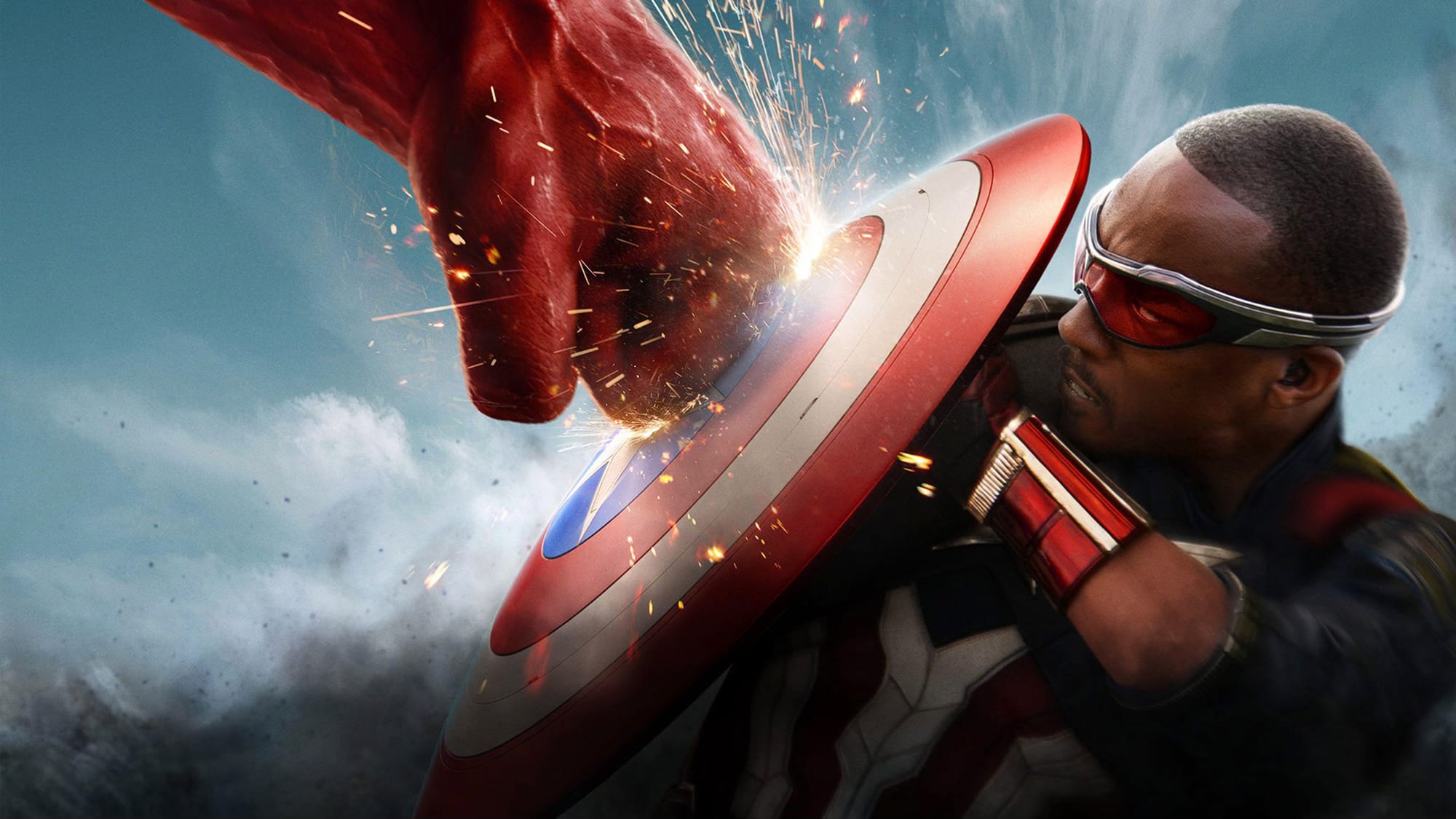
Early this year, Marvel returned to our cinemas with the first film in the franchise’s cinematic universe after a year-long hiatus. Captain America: Brave New World isn’t a perfect film, but it’s a hell of a lot better than Marvel’s recent offerings. It may signal the Marvel Cinematic Universe’s first step towards regaining its former glory.
At their best, Marvel films aren’t Shakespeare, but they are good action movies—even if they feature men who fly around in metal suits, dress like cats, and talk to ants. The Marvel Cinematic Universe often takes the cartoonish superheroes you loved as a kid and translates them into the real world in a way that isn’t laughable. Marvel makes superheroes into real people engaged with serious problems—not just people dashing about in tights shouting corny catchphrases and battling villains who laugh maniacally while giving speeches about their evil plans for world domination.
Ant-Man is about an ex-con who seeks to redeem himself by helping a scientist and his daughter steal a dangerous high-tech weapon from the scientist’s rogue protégé. The plot is straight out of a classic heist film—even though the ex-con wears a suit that lets him shrink to the size of an insect and employs a sonic gizmo to talk to ants. Aside from those details, it could be the plot of a Mission Impossible film. This is typical of the franchise at its best: rather than creating your typical superhero film—something like Richard Donner’s Superman or Tim Burton’s Batman, both of which are awash in comic-book camp—it makes action movies that just happen to involve superheroes.
That’s what Captain America Brave New World is: an action movie with superheroes. The new Captain America, Sam Wilson, played by Anthony Mackie, is at a party at the White House when one of his friends mysteriously tries to assassinate the President while in a fugue state. The President—former US General Thaddeus “Thunderbolt” Ross, played by Harrison Ford—is an old foe of Wilson’s and orders him to stay out of the resulting investigation. The ensuing political firestorm derails the President’s attempts to get an international treaty signed. Meanwhile Wilson is, of course, determined to prove his friend’s innocence. This could be the plot of a James Bond movie: a political assassination, a deadly conspiracy, and a hero who is forced to go rogue to save the day. The protagonist wears a star-spangled suit, is armed with an indestructible shield, and flies around in a winged jetpack—but those are just details. At its core, the film is a classic action movie.
The “Brave New World” of the film’s title, though, draws attention to a serious flaw in the franchise’s storytelling. In Avengers Endgame, the climax of almost twenty years of Marvel films, half of the Earth’s population—along with half of the population of the rest of the universe—is first wiped out of existence and then brought back five years later in an event unfortunately called “the Blip.” You see snippets of the consequences in Endgame. Freight ships lie idle on the Hudson River, abandoned and uncrewed. Garbage piles up on the streets of San Francisco. Maybe there weren’t enough people to collect it, or maybe no one had the will to clean up their rubbish after seeing half of their friends and family fade into dust. Surely, that crushing sense of despair would also have stopped people from teaching their students, running their media empires, or waging war? This was fertile soil for stories—but it was left untouched.
In the eleven films Marvel’s made since Endgame, there are only vague allusions to people displaced by the vanishing and reappearing populations. The Blip’s ramifications for politics, economics, and culture never even form a clearly discernible backdrop to the films’ plots, let alone providing central plot points. This was a missed opportunity. Imagine how the Blip might have affected just one real-life scenario: the Israel–Palestine conflict. Half of all Israelis and Palestinians disappear. The survivors then decide that their feud is pointless in the face of this Doomsday-level event, lay down their arms, and make peace. Then, five years later, an Israeli settler comes back to find that his home has been given to the Palestinians and a Hamas jihadist returns to find that all his comrades have given up the fight. What happens then? What do that settler and that jihadist do? What do the rest of us do? There is a huge reservoir of dramatic potential here that remains untapped.
Brave New World’s creative team, led by director Julius Onah, have continued this disappointing and stubborn refusal to use the material in front of them. In the latest film, Ross wins office by promising that his administration will mark a new period in which the American people and the world will deal with the problems created by the Blip together. His slogan—“Together”—is printed in giant letters on a billboard behind him at a rally, but the film never clarifies how or to what end Ross hopes to unite people. His “Together” remains as empty as any real-life politician’s slogan.
The film’s makers do try to inject some substance into the slogan at one point. At the party mentioned above, at which he’s later almost assassinated, Ross announces that a powerful new metal has been discovered, adamantium, and that his treaty will ensure that this miracle metal, rather than becoming a source of international power struggles, will be used for the good of all mankind. Adamantium is the metal that, elsewhere in the Marvel universe, gives the superhero Wolverine an indestructible skeleton and claws that can slice through anything. That’s a useful metal—but you wouldn’t know it from listening to Ross’s speech. There are no indications of the devastation adamantium might unleash in the wrong hands. Ross fails to convince the audience that this rock is worth going to war for. The term “adamantium” remains just a bit of technobabble. Despite its title, the film doesn’t grapple with the “Brave New World” in which Marvel’s characters are now living.
