


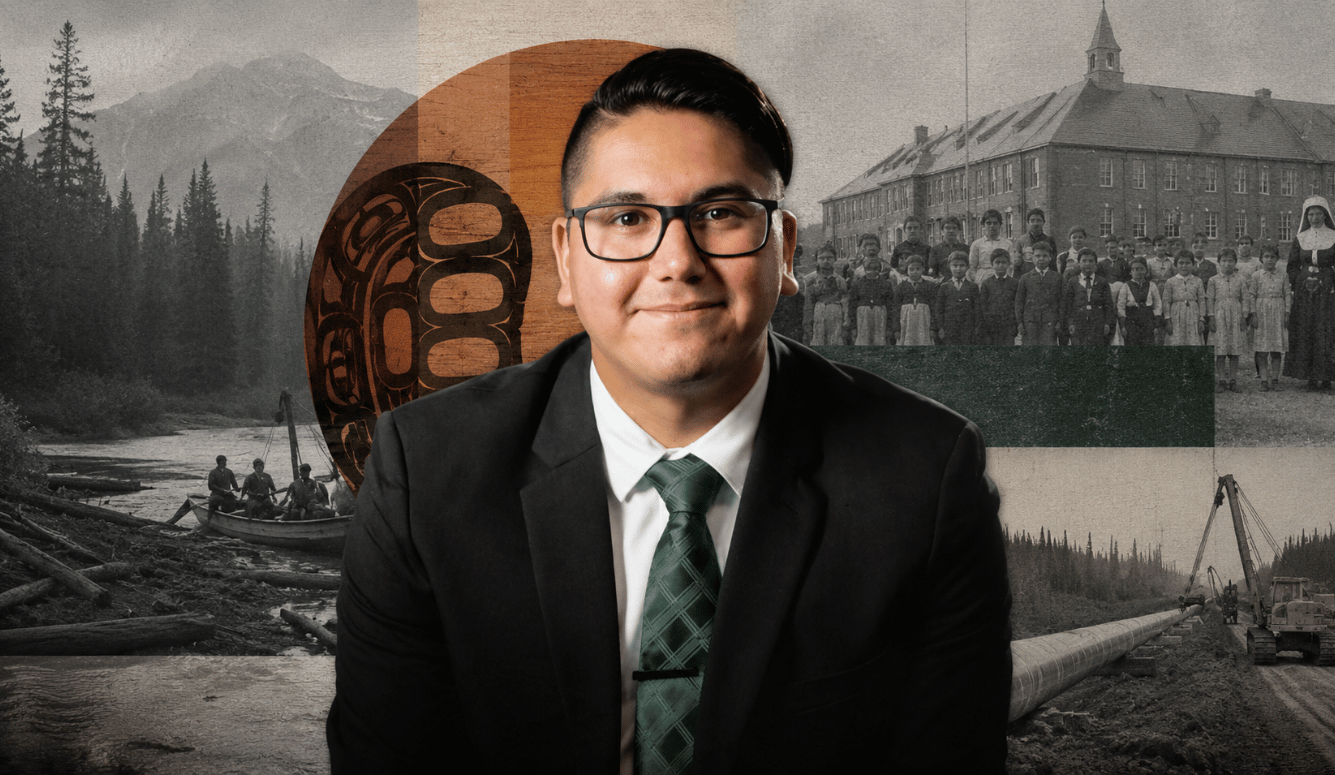
Jonathan Kay: This week I’m going to take you into the fascinating and politically fraught world of Canadian Indigenous governance, with a very special guest: Aaron Pete, Chief of the Chawathil First Nation in British Columbia and host of the Nuanced podcast.
Here at Quillette, we’ve often covered Canadian Indigenous issues, but generally from one of two distinct perspectives.
First, there’s Greg Koabel’s popular Nations of Canada historical series, of which we’ve now published twenty-nine separate instalments, telling the story of Canada’s creation, with a heavy focus on the seventeenth-century geopolitics of Indigenous groups.
Preventing Canada’s Next Unmarked-Graves-Style Social Panic

Journalists should resolve to treat their Indigenous sources as real-life human beings—as opposed to mystic savants who channel sacred and unfalsifiable ‘knowings’
As you’ll hear, Chawathil is a relatively small and economically challenged First Nation reserve, located about two hours inland in southern British Columbia along the Fraser River Valley. It doesn’t get a lot of media attention compared to some of the larger and wealthier First Nations communities whose territories lie along B.C.’s more prosperous, densely populated coast.
A lot of my questions to Aaron will focus on the governance challenges he and his band councillors face in such a small place, where everyone knows everyone. We’ll also talk about some of the ways in which he finds himself at odds with other First Nations chiefs regarding his political philosophy, which is less focused on the sweeping anti-colonial rhetoric and postures that became popular during the prime ministerial tenure of Justin Trudeau, and more focused on how to improve Indigenous communities socioeconomically.
Canada is a big place, with more than six hundred First Nations communities, including a few you’ll hear me refer to, and I’ll mention them here so that when you hear references to them in the conversation, they won’t seem to come out of left field. My own limited journalistic experience covering Indigenous communities is confined to communities in Quebec and Ontario, in the eastern part of the country. That includes Kashechewan, a Cree community on the west side of James Bay in northern Ontario.
You’ll also hear me and Aaron refer to the Nisga’a, a First Nation in northwestern British Columbia that signed a landmark self-government agreement with the Canadian government twenty-six years ago. And finally, you’ll hear us talk about the Wet’suwet’en First Nation, an inland northern B.C. First Nation whose leadership fell into internal conflict six years ago over the issue of permitting construction of a liquefied natural gas pipeline through their territory.
With that said, please enjoy my interview with Indigenous Chief and podcast host Aaron Pete.
Transcript
JK: So a couple of months ago I was in BC. I was speaking at an event at UBC Okanagan, which, as you know, is in the interior—a beautiful place called Kelowna. If you drive from Kelowna toward the Pacific Ocean, you go through Penticton, south of Kamloops, and then, I guess when you’re about an hour, hour and a half west of Vancouver, the mountains give way to foothills along the Fraser River and things become flat. I was just looking at a map—I think I must have driven through your territory, right?
