

Good Intentions, Bad Outcomes
Those who ignore politically inconvenient information about affirmative action are more interested in defending a narrative than in actually solving a problem.


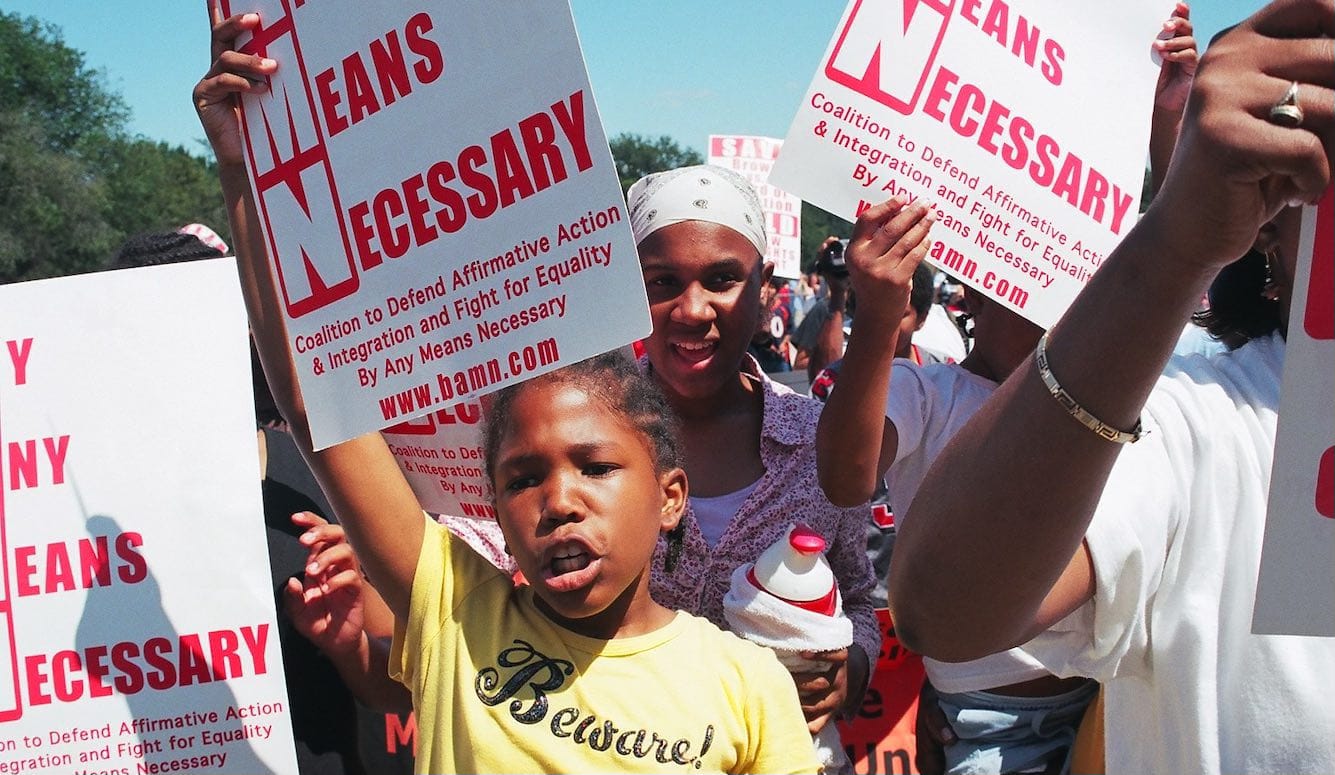
A review of The Affirmative Action Myth: Why Blacks Don’t Need Racial Preferences to Succeed by Jason L. Riley, 288 pages, Basic Books (May 2025)
Jason L. Riley’s important new book is a welcome contribution to a politically fraught debate. The Affirmative Action Myth: Why Blacks Don’t Need Racial Preferences to Succeed offers a frank reassessment of a controversial policy and asks searching questions about the reasons for its failure. Blacks have become the presumptive avatar of America’s downtrodden and oppressed—they are typically the country’s least successful demographic according to a variety of metrics, from academic achievement to socio-economic status. But as Riley notes in the book’s introduction:
The relevant question is to what extent does past or current racism, in whatever form it takes, explain ongoing racial disparities, and to what extent are racial differences in outcome being driven primarily by other factors that don’t get nearly the amount of attention that racial-bias explanations have received.
Riley maintains that affirmative action has failed to benefit blacks. But as the subtitle of his book indicates, he is not even convinced that it was ever necessary in the first place. It persists today even so, he argues, because its advocates are more interested in defending a narrative than they are in solving a problem.
Riley’s case against affirmative action is broken into five parts: the condition of black America before and after affirmative action; the stigma placed on black students and professionals by racial preferences; the importance of rebuilding the black family as a preemptive alternative to affirmative action; the problem with the case for reparations; and the tactical use of falsehoods to defend what most people now accept is an indefensible policy. The upshot is a work that offers a bracing overview of the distortions still plaguing America’s racial discourse.
Those who cite racism as the primary reason for black disadvantage may be surprised to learn that blacks were doing significantly better when the country was systemically racist and interpersonal racism was a lot more common and a lot less taboo. Riley notes that in the mid-twentieth century, the median income for black Americans rose meteorically:
In 1939, the annual median income was $360 for black males and $1,112 for white males. By 1960 those median incomes had reached $3,075 and $5,137, respectively, representing a 568 percent increase for blacks versus a 362 percent increase for whites.
The black middle class was also growing at a time of racial apartheid in the South and racial elitism in the North. And yet, faced with these odds, more black families lived in two-parent households, blacks had higher graduation rates than they do today, and higher rates of entrepreneurship. A paragraph from the first chapter of Riley’s book is worth quoting in full:
Between 1940 and 1960 the poverty rate for blacks fell nearly in half, from 87 percent to 47 percent. It is widely assumed that today’s black middle class owes its existence and sustenance mainly to affirmative action and government welfare programs. But this gets the order wrong. The forty percent drop in black poverty occurred well before President Lyndon B. Johnson’s “war on poverty” and other Great Society initiatives pertaining to education, housing, and health care that were launched in the late-1960s and expanded in the 1970s. It occurred before the landmark Civil Rights Act of 1964 and Voting Rights Act of 1965 passed. It occurred long before not only the election of a black president but before blacks had any significant political power or influence in Congress or had won mayoral elections in major American cities with large black populations. And it predated the affirmative action hiring and preferential college admissions policies that were implemented in earnest in the 1970s. In other words, these black gains coincided with peak Jim Crow, when housing and employment were sharply limited for black people, who were shut out of union jobs and many professions dominated by whites.
Conclusion? “[W]ell before the implementation of racial preference policies, blacks were making unprecedented strides despite facing tremendous racial hostility. Those who credit affirmative action with black educational advancement are getting the order wrong. The black advancement came first.” Therefore, “the elimination of white racism, however desirable then and now, is not a prerequisite for black socioeconomic advancement.”
In the early 1960s, affirmative action effected a deliberate move away from the aspiration of neutral non-discrimination and towards what Riley calls “a more aggressive strategy for seeking out minority applicants.” Unfortunately, this did not produce the intended results. Instead, a downward spiral began with the advent of Johnson’s Great Society, and black upward mobility ground to a halt once affirmative action introduced a racial quota system. “To say that affirmative action led to the jump in black incomes is to willfully ignore the preexisting trendlines,” Riley writes. “At best, racial preferences helped to continue something that was already happening. At worst, racial preferences did more to throttle than to expedite black upward mobility.”
Riley goes on to explore how racial preferences have helped to stigmatise black achievement and cast suspicion on black accomplishment. When I appeared on C-SPAN’s Washington Journal recently, one caller informed me that my personal success had been delivered by diversity, equity, and inclusion initiatives. Another reproached me for criticising the very affirmative action policies from which he alleged I had benefitted. Remarks like these, which most black professionals and students will have encountered at some point, are a direct consequence of policies designed to favour one race at the expense of others.
Riley relays the following remark from economist Thomas Sowell:
“One of the ironies that I experienced in my own career was that I received more automatic respect when I first began teaching in 1962, as an inexperienced young man with no Ph.D. and few publications, than later on in the 1970s, after accumulating a more substantial record. ... What happened in between was ‘affirmative action’ hiring of minority faculty.” If even a public intellectual of Sowell’s stature can feel the indiscriminate stigma conferred by affirmative action, the effect on the self-esteem of ordinary blacks will be much more acute.
Today, colleges lower standards to admit black students, a practice that discriminates against more qualified applicants (usually Asians and whites). This also leads to disproportionate attrition rates among black students who find they are mismatched with the schools in which they enrol. The unintended effect has been to worsen educational attainment by black males, who were more successful before racial preferences were implemented to boost their representation in academia and the workforce.
Chapter four deals with the debate over reparations, which advocates say should be paid to the descendants of slaves. Riley argues that the whole proposal is impractical and nonsensical, and that the nightmarish prospect of deciding who would qualify for these payments in practice is enough to dismiss the idea outright. Besides which, the reparations debate ignores many of the factors contributing to black abjection. Will this money do anything to enhance blacks’ commitment to education and family formation? And is there any reason to think the disempowering victim mentality would diminish or that racial hostility would be ameliorated by handing out cheques?
Riley does a good job of analysing the debate’s complexities and incoherencies in the book’s fourth chapter, where he shows that proponents of reparations often employ a tendentious reading of American history to make their case. Revisionist works of history like the New History of Capitalism and the New York Times’ 1619 Project attempt to provide the case for reparations with intellectual weight. But Riley concludes that the revisionist histories are filled with falsehoods and misrepresentations, and that reparations would do more harm than good, in any case. Initiatives like these, he argues, are an iatrogenic fix to what ails black America—the cure would be worse than the disease.
The only misstep in this section is his gratuitous contention that emancipated black Americans indirectly benefitted from slavery because it allowed them to prosper in the freedom of the United States:
To claim that black Americans living today would be better off if their African ancestors had not been sold into slavery is to invite a comparison of outcomes between the descendants of black Africans who never came to the US and those who did. And it’s abundantly clear that despite centuries of slavery and Jim Crow, black Americans today are far better off than black people who never left Africa.
There are better ways to emigrate than in human bondage. Riley does acknowledge that those Africans who lived and died in bondage were certainly not better off, but the idea that we should downplay the monstrous legacy of slavery because it eventually led to first-world citizenship is perplexing and counterproductive. Not only does an argument this pungent risk tainting everything else in his book, but it adds nothing to the case against reparations that it is invoked to support.
Riley notes that many scholars have identified fatherlessness as a reliable predictor of social pathology. In addition, the low priority given to educational success in many black homes leads to a lack of preparedness for high-school proficiencies, let alone those necessary for success in college. In line with the work of Ian Rowe and Kendall Qualls, Riley’s research prompts him to conclude that “family structure is a stronger predictor than race when it comes to which students are suspended or expelled. … Indeed, one can predict a group’s discipline index quite reliably simply by knowing the proportion of its children living with two parents.”
Last—but definitely not least—Riley turns his attention to the prevalence of falsehood and disinformation in affirmative-action discourse. Perhaps the biggest lie of all, Riley contends, is that “blacks and whites alike have been led to believe that black people can’t advance without racial preferences, even though there is a long history in this country of them doing exactly that.” Riley’s impatience with this belief courses through everything else in the book—it is the falsehood on which all other misconceptions about race depend. This meta-lie and all the lies that constitute it support a self-defeating narrative of perpetual grievance and victimhood.
Riley accuses progressives of ignoring “hard facts” whenever those facts undermine or refute political claims about “the main causes of racial inequality today and how best to address them based on past experience.” He also singles out black intellectuals and politicians who continue to support racial preferences and refuse to acknowledge the history of black advancement and upward mobility before the civil-rights era. After all, if they have succeeded on their merits, why do they insist that structural and systemic barriers are preventing others of their race from doing the same?
Riley argues that the use of dishonesty in pursuit of an ostensibly noble goal is disfiguring the debate about affirmative action. Lies by commission and omission are routinely employed by social-justice activists and scholars to defame opponents and misrepresent data, behaviour they believe is justified by the nobility of their goals. This is why they downplay the role of Africans in the slave trade; it is why the 1619 Project is riddled with historical falsehoods; it is why the data about police shootings is fudged; and it is why the success of Caribbean immigrants and other nonwhite minorities is ignored during conversations about systemic racism.
Naturally, those dealing in lies must work to silence truth-tellers. Those who “point out these distortions, false claims, key omissions, and factual errors are ignored or dismissed as Uncle Toms, while non-blacks who do so are accused of racism. Meanwhile, too many academics and media elites not only indulge this pseudo-scholarship but are eager to celebrate it.” In 1989, a number of critical theorists tried to suppress a damning critique of their claims and tactics by Randall Kennedy before it appeared in the Harvard Law Review. If he didn’t bury his own paper, they warned, it would be used by reactionaries to thwart the pursuit of racial justice. On the other hand, the tendentious pseudo-scholarship of Nicole Hannah-Jones was rewarded with a Pulitzer Prize and acclaim across liberal institutions.
I know from personal experience that lying is a favoured tactic of social-justice scholars and activists. I’ve been the target of their smear attempts myself. Dishonesty is not an aberration in social-justice activism; it is the norm among people for whom desirable ends justify all means.
Today, progressive activists, columnists, academics, and politicians insist that affirmative action is synonymous with racial justice and that the public are on their side. In fact, Riley points out, the policy has become “synonymous with racial favoritism, double standards, and preferential politics for certain groups.” That blunt definition seems to be shared by most Americans. And contrary to the claims of its dwindling band of apologists, affirmative action is not particularly popular, even in deep blue states. People are not willing to accept its downsides if it cannot achieve its intended goals. And it has not been able to achieve its intended goals because it misdiagnosed the cause of the problems it was supposed to solve.
Jason Riley has given us a timely, thorough, and well-researched examination of affirmative action’s failings. This is a valuable book for anyone seeking to better understand the debate about affirmative action. It is partly a reference work of convenience, handily collecting the ideas and arguments of writers like Thomas Sowell, Walter Williams, and John McWhorter into a single resource. But it is also a fascinating monograph in its own right.
Originally published at Quillette. Visit or subscribe for more quality journalism.
 | A guest post by
|