

Hell in North Germany
A riveting new book by American historian Lynne Olson re-examines the story of Ravensbrück, the Nazis’ notorious concentration camp for women. By Ron Capshaw

A review of The Sisterhood of Ravensbrück by Lynne Olson, 384 pages, Random House (June 2025)
Tell it to the world.
~a Frenchwoman on her way to the gas chamber.
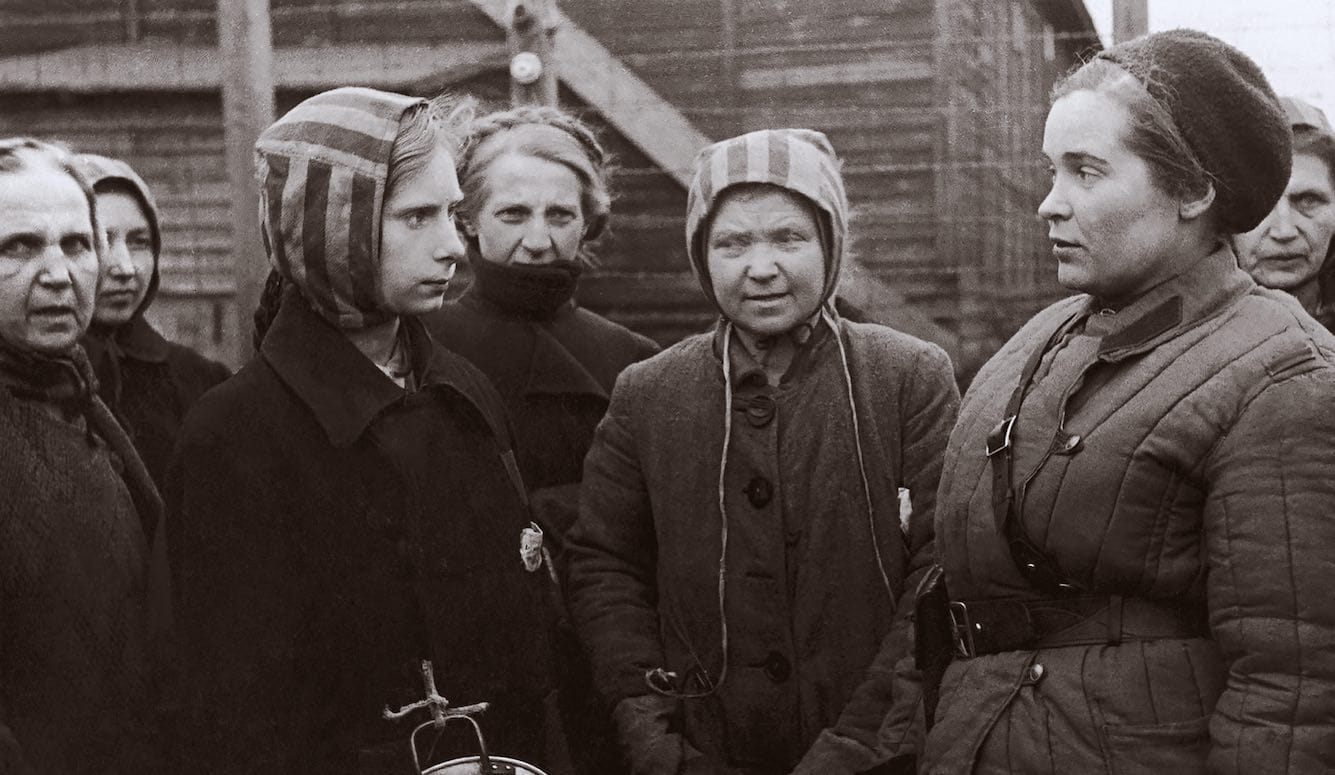
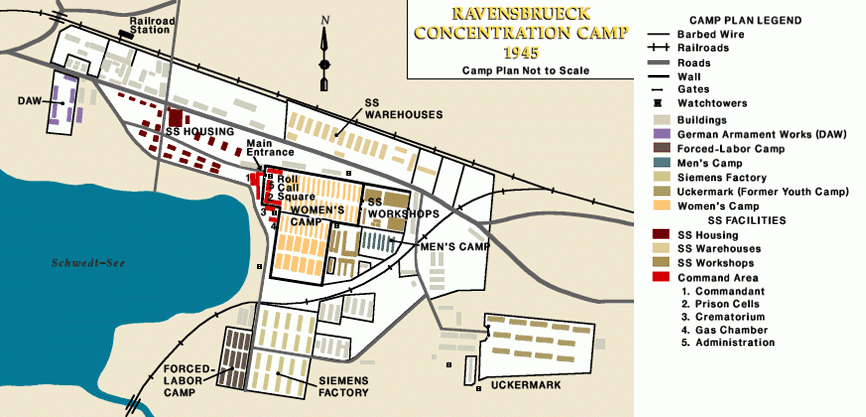
The Ravensbrück concentration camp was constructed in late 1938 about fifty miles north of Berlin near a former health resort. Although a small camp for male prisoners was built next to the main complex in 1941, Ravensbrück became infamous as the largest camp exclusively for female prisoners within the Third Reich’s “pre-war borders.” Between 1939 and 1942, its prison population grew from 2,000 to 11,000 women. By 1944, it held 26,700, and by January 1945, that number had risen to 70,000. Prisoners were transported there from more than thirty countries: 48,500 from Poland, 28,000 from the Soviet Union, 24,000 from Germany, 8,000 from France, and 2,000 from Belgium. Fifteen percent of the prisoners were Jewish, and eighty percent were political prisoners classified as “race defilers,” “socials,” or simply “criminals.” The majority of the latter were members of various resistance movements against the Nazis. Despite its size, little was known about it until after the Cold War because it was liberated by the Soviets in 1945 and subsequently shielded by the impenetrable Iron Curtain.
In a riveting new book titled The Sisterhood of Ravensbrück, American historian Lynne Olson re-examines the story of that now-notorious institution (unless otherwise noted, the quotations and facts in this essay are sourced from Olson’s work). Drawing on memoirs, interviews, and freshly unearthed information from Holocaust studies about the camp, Olson tells the story of two inmates who quietly defied their captors to record events that might otherwise have remained buried forever. These inmates are the reason we know as much as we do about the horrors of that camp. “It was really like Dante’s Seventh Circle of Hell,” one of the survivors recalled. “Death was all around us. We learned to read the signs—one could see very well when one of our comrades had given up and could no longer live.” Of the inmates, another said, “I barely noticed their skeletal forms or their shaven heads. [It was] their dead vacant stares. They were living zombies.”
