

How Hamas Exploits the West
By Pamela Paresky and Dan Schueftan

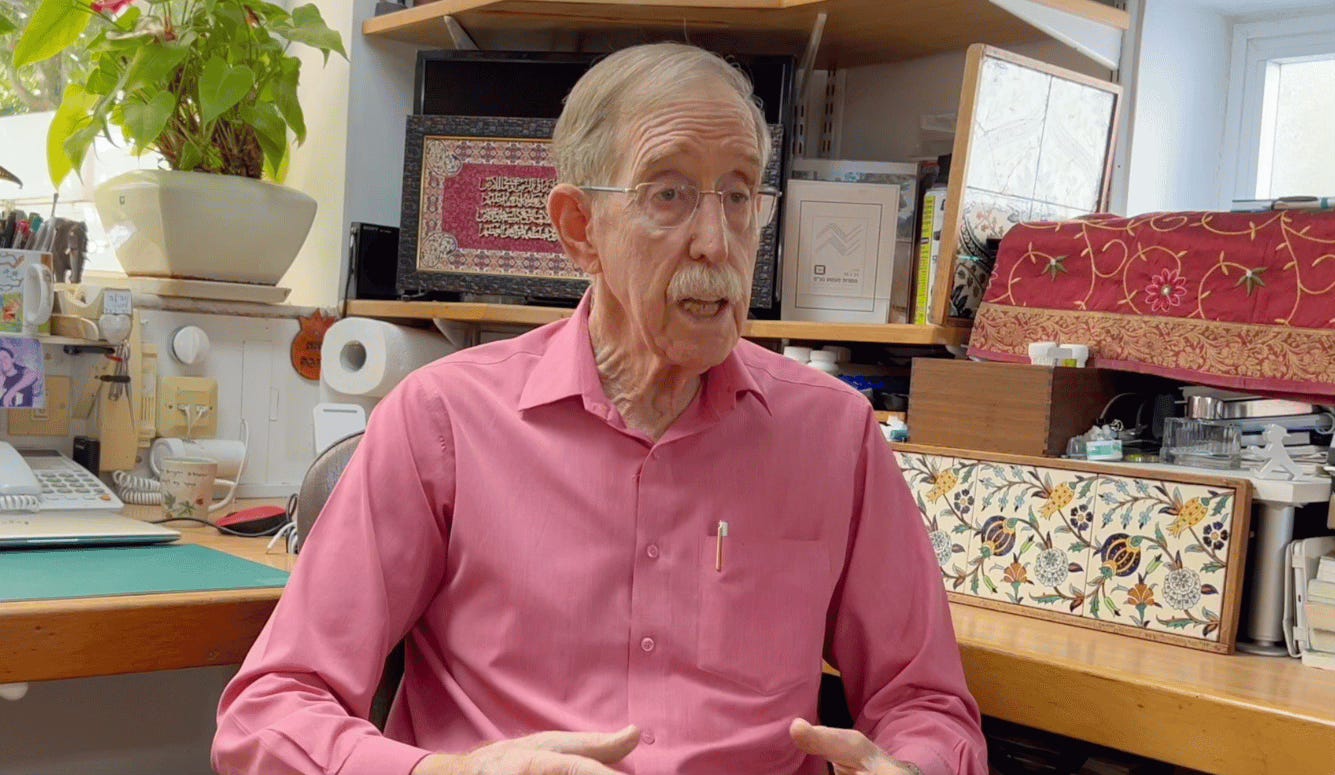
On 2 March, Pamela Paresky spoke with Dr Dan Schueftan, a leading Israeli political scientist and national security expert who has advised multiple Israeli prime ministers.
They discuss Israel’s resilience after October 7, the necessity of defeating Hamas, and the shifting alliances reshaping the Middle East. Schueftan critiques the influence of ideological extremism on Western democracies and urges a return to pragmatic, civic-minded liberalism.
The conversation also touches on leadership, minority rights, immigration in Europe, and the need for meaningful—not symbolic—social progress.
I. Israel is Winning
Pamela Paresky: What’s happened over the last seventeen or eighteen months? Where are we now?
Dan Schueftan: Well, now we know we’ve won the war. I always believed we would, but I didn’t know it would be this decisive. I’m delighted to say we’ve practically won. Yes, there’s still more to come—there will be pain, and Israel will be hurt again. But if you look at the big picture, it's more positive than I expected.
PP: That might surprise people—given the devastation in Gaza, that not all the hostages are back, and Hamas still holds power. How can you say Israel has won?
DS: Because I agree with what my grandmother used to say: it’s better to be rich, healthy, and young than old, sick, and poor. Sure, things aren’t perfect—but the real question is whether, overall, we are winning. If you understand what this war is about, I believe we are winning in a very major way.
Let me explain. This war is about whether civilised people can defend themselves against barbarians—even when those barbarians hide behind their own civilians. And many on the liberal side argue: “If defending ourselves means harming people who aren’t personally guilty, we can’t do it.” That’s exactly what the barbarians are counting on. Their main weapon is our values.
So, we need to demonstrate—and we have demonstrated—that we can defeat barbarism without losing our moral compass. That we can be like Sparta toward our enemies, while remaining like Athens among ourselves and with others who are civil and can be negotiated with.
Now, this has become much harder in the last forty to fifty years, especially since the collapse of the Soviet Union. Why? Because after that collapse, the West assumed liberalism had won, and we could afford to tie not just one, but both hands behind our backs.
Liberals used to believe that you fight with one hand tied so as not to become like your enemy. But progressives went further—they said you shouldn’t be allowed to fight at all, especially if your enemy has darker skin. If your enemy is black or brown, then he must be right, and you must be wrong. It’s one of the most racist attitudes I can imagine: If you’re white, you’re guilty; if you’re not, you’re innocent.
And it excuses barbarism. “Well,” they say, “he suffered from slavery or colonialism, so his behaviour is understandable.” This thinking ignores that it was white people who ended slavery, which had been a global norm. And colonialism? That’s just a new name for something that has defined most of human history: the strong seeking to dominate the weak. What changed was that we decided to stop.
So this distorted, sick, progressive ideology has weakened us and strengthened our enemies.
And then there’s technology. Today, a bunch of primitive tribes in Yemen can launch ballistic missiles. Think about that: thirty or forty years ago, only superpowers had that kind of weapon. Now you can buy off-the-shelf tech, modify a toy, and turn it into a precision-guided munition.
Alas. If the West lets them . . .