

Israel’s Hard-Won Victory
The Jewish state has secured its borders, recovered all living hostages, and put its enemies on notice as to what awaits them if they attempt a reprise of 7 October.

Last week, The New York Times and Israeli sources reported on the discovery of a six-page 2022 memo believed to have been authored by former Hamas leader Yahya Sinwar (1962–2024), detailing his early plans for the 7 October 2023 terrorist attacks. The news was overshadowed by the emerging American-brokered ceasefire, which is unfortunate, as the document does much to clarify why and how this war began in the first place.
Hamas’s 7 October attacks killed almost 1,200 people, and featured numerous instances of terroristic sadism—including the deliberate slaughter of more than three dozen children, and the gang rape of women prior to their execution. Such acts were consistent with Sinwar’s apocalyptic theory of Islamic holy war, which he’d originally set out in a 2004 novel featuring a heroic Palestinian “martyr” cutting down Jews “like sheep.” His 2022 document was a plan for how to bring such dark fantasies to life. “Document the scenes of horror, now, and broadcast them on TV channels to the whole world,” one of his commanders instructed Hamas fighters attacking a kibbutz. “Slaughter them. End the children of Israel.”
That morbid exhortation wasn’t intended to be metaphorical: Sinwar saw these attacks as just the first step in a larger confrontation that would end in Israel’s literal destruction.
According to his plan, Hamas fighters would seize and hold Israeli military objectives and population centres, while Arab residents of Israel, the West Bank, and East Jerusalem, in addition to Iran and its Lebanese proxy, Hezbollah, would stage their own attacks; having been inspired by graphic scenes of carnage perpetrated by Hamas. “Images must be released which will trigger a surge of euphoria, frenzy, and momentum among… our entire Islamic nation,” Sinwar wrote. “This is meant to spur them to respond to the calls to rise up and revolt.”
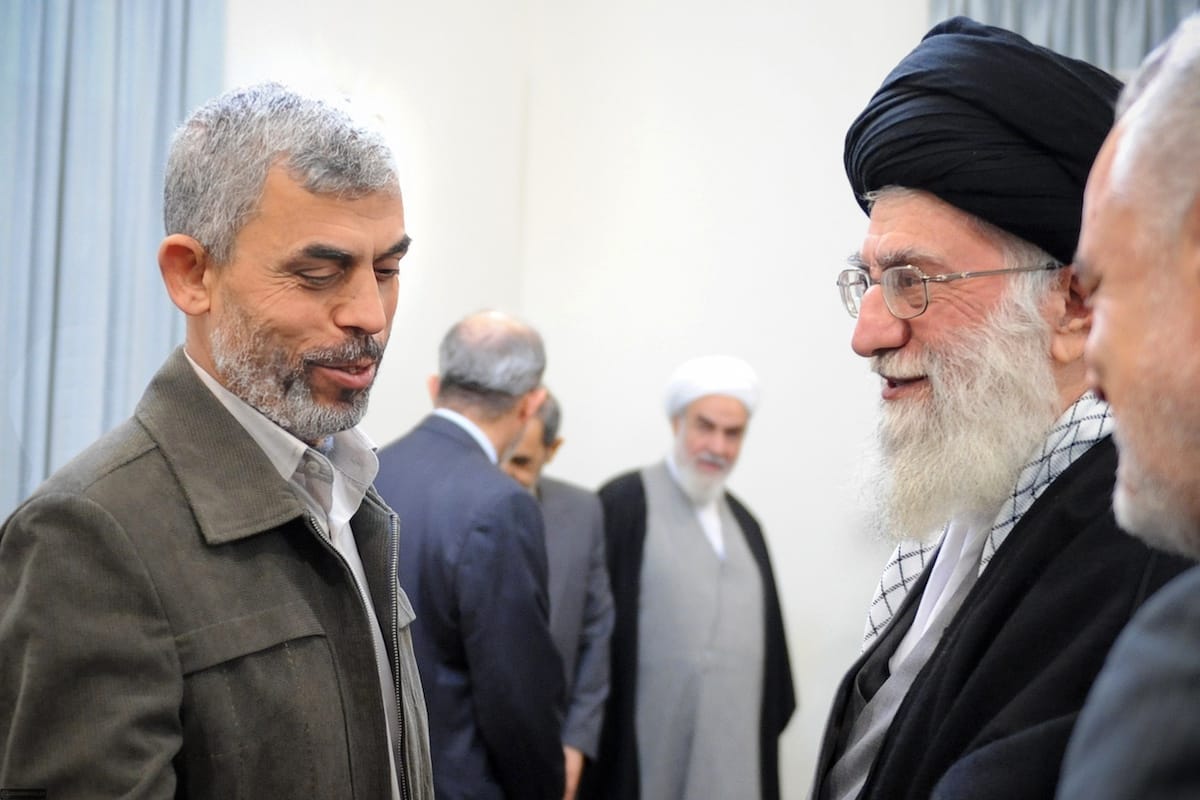
For two years, Hamas apologists in the West have been referring euphemistically to the 7 October attack as a grassroots act of decolonial “resistance.” In fact, it was a pre-planned act of mass murder, performed at the behest of a lifelong sadist who’d been rhapsodising publicly about annihilating Jews for decades.
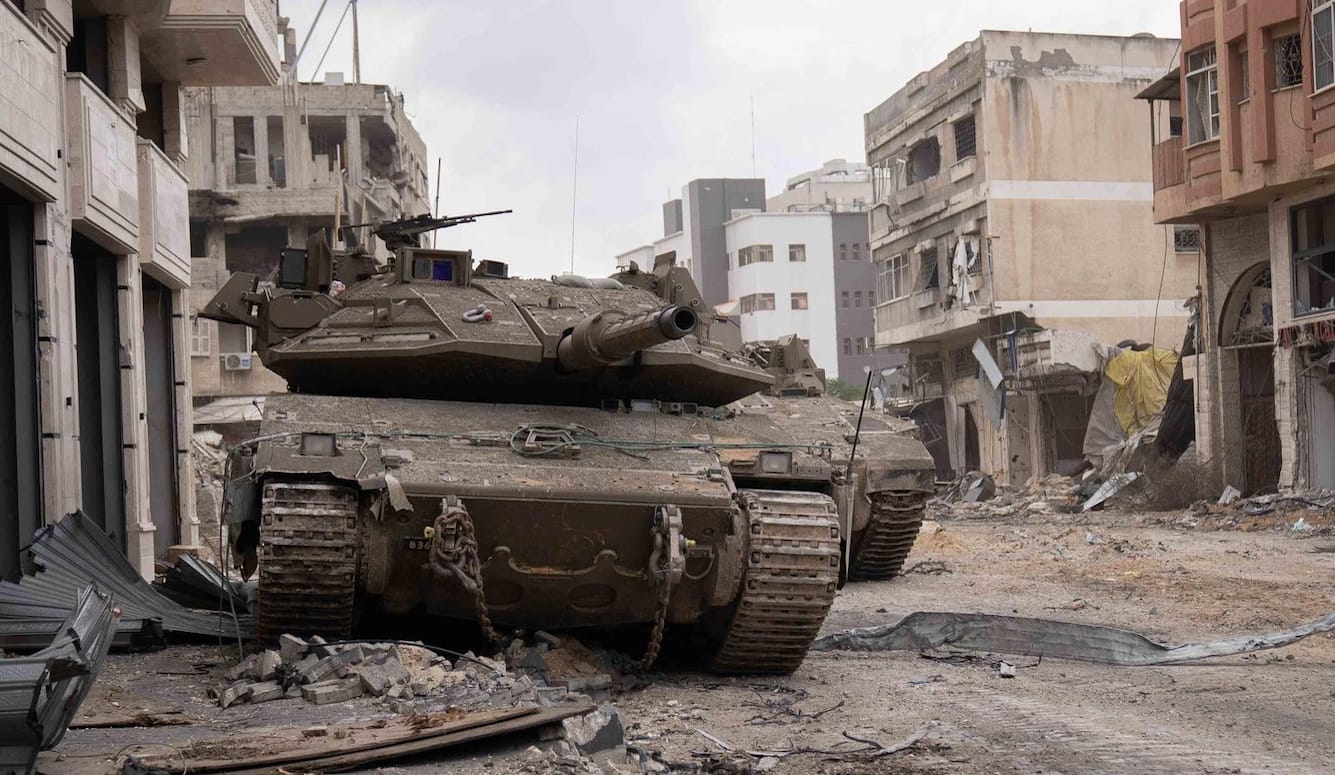
Sinwar warned Hamas commanders that if the climate of murderous chaos they sowed didn’t prevent Israel from launching an effective counterattack, then “the situation will turn against us in the worst possible way”—which, of course, is exactly what happened. While Sinwar got the horrifying spectacle he craved, his gambit proved a strategic catastrophe. Israel properly interpreted the attack as an all-out declaration of war, and responded accordingly—laying waste to Hamas’s arsenals in Gaza, blowing up tunnel networks, and systematically decimating Hamas paramilitary units that attempted to engage with Israeli forces. Sinwar himself was killed, along with Hamas’s other 7 October planners and leaders, including Ismail Haniyeh, Mohammed Deif, and Marwan Issa.
Like other Western armies, the IDF (Israel Defense Forces) has historically taken pains to spare civilians the horrors of war. But due to Hamas’s deliberate strategy of positioning its military assets in hospitals, schools, mosques, and homes, many thousands of innocent Gazan civilians were also killed in Israeli attacks.
Iran’s efforts to support Hamas through its Hezbollah proxy force in Lebanon also ended disastrously. In a series of bold strokes, Israel annihilated Hezbollah’s leadership in Beirut, invaded southern Lebanon, and then successfully attacked Iran’s home command structure with almost complete impunity. In June, the US Air Force and Navy attacked a trio of Iranian nuclear sites, with broad support from the international community. Even Syria, once an especially implacable foe of the Jewish state (as well as a conduit for Lebanese-bound Iranian munitions), is now led by a government that has little interest in anti-Zionist agitation.
Compared to these historic geopolitical developments, the symbolic concessions won recently by the Palestinians—such as the repeated false claims of Israeli “genocide” alleged by international bodies—pale in significance.
Notwithstanding the recent recognition of nominal Palestinian statehood offered by a number of UN delegations, the rubble-strewn wasteland that Sinwar left behind is farther than ever from any real form of self-rule. With scattered exceptions, no one in any position of authority around the planet actually wants a group of Islamist sociopaths to run a sovereign Gaza Strip.
This includes the leaders of Arab governments. As Benny Morris noted recently in Quillette, conspicuous absences from this week’s otherwise well-attended international summit at Sharm el-Sheikh included the rulers of Saudi Arabia, the United Arab Emirates, and Oman. All of these countries will be asked to contribute financially to the rebuilding of Gaza. But none will do so if they believe those funds will end up in Hamas coffers.
In most contexts, Israeli Prime Minister Benjamin Netanyahu is, like US President Donald Trump, a hard politician to defend. But both men deserve credit for staying the course until Hamas was forced to accept a ceasefire deal heavily skewed toward satisfying Israeli war aims. Israel got back every single one of the remaining living hostages that Hamas kidnapped two years ago, and retains full military control of Gaza’s entire periphery—including, crucially, Egyptian border areas that Hamas has exploited for decades to import weapons and contraband. Even after the establishment of the technocratic “International Stabilisation Force” envisaged under the terms of Trump’s (improbably ambitious) 28-point peace plan, Israel will remain ensconced in a buffer zone within Gaza. The only truly bitter pill Netanyahu had to swallow was the release of Palestinian prisoners, including 250 serving life sentences for murdering Israelis.
During the war, Netanyahu repeatedly insisted that Israel would destroy Hamas root and branch. This was a mistake, and one that’s given some critics a pretext to falsely cast the ceasefire deal as a defeat for Israel. History shows that the complete destruction of terrorist groups and paramilitary insurgencies, especially those animated by apocalyptic ideologies, is extremely difficult. Even in those rare cases where this feat is accomplished—as with the Sri Lankan army’s destruction of the Liberation Tigers of Tamil Eelam—the toll in resources and human life is extreme. Colombo’s campaign against the Tigers took 26 years. In the final six months alone, as many as 170,000 civilians were killed (estimates vary wildly), as LTTE leader Velupillai Prabhakaran made his last stand on the beaches of northern Sri Lanka. An analogously conceived campaign to eliminate Hamas would likely have produced a similarly horrific tally.
It’s hard to predict what will ultimately become of the Trump-brokered peace—in part because, as Morris notes, regional Arab actors such as Egyptian president Abdel Fattah El-Sisi, Palestinian Authority leader Mahmoud Abbas, and Qatari Emir Tamim bin Hamad Al Thani are all jockeying for influence over the process of Gaza’s physical and political remediation—as well as control of the staggering humanitarian cash flows that will be required for this project.
