

On the Brink Again
A collapsed ceasefire has pushed America and Iran back towards full-scale war over the Strait of Hormuz. Now Trump must decide whether to finish the job or give Tehran one more chance.

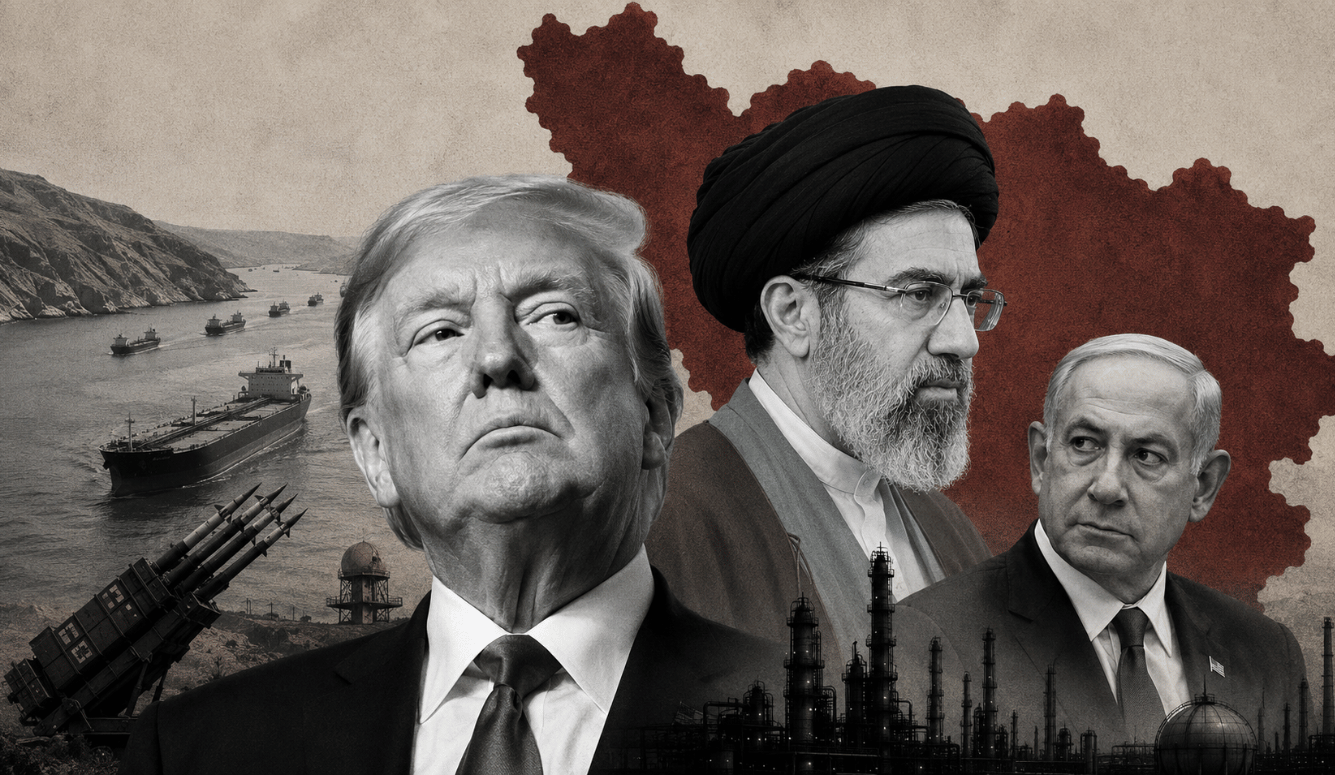
The United States and Iran appear to be on the brink of renewing full-scale warfare, following a week of limited but steadily expanding hostilities. Tehran has fired at ships attempting to traverse the Strait of Hormuz, while American jets, drones and cruise missiles have targeted Iranian anti-aircraft missile systems and rocket and drone launch and storage sites, mainly with the aim of degrading Iran’s ability to control the strait. Yet Iranian truculence has not diminished, and the Americans, meanwhile, have been reinforcing their aerial deployments around the Middle East: a new squadron of F-16 fighters reached Jordan over the weekend, and KC-135 air-refuelling tankers have arrived in Israel. Fleets of these tankers enabled Israeli and American bombers to reach and return from Iran during the protracted bombing campaign of February–April 2026.
The past week’s American strikes, gradually increasing in number, at first hit military sites along Iran’s southern shoreline and then crept northwards, targeting several sites near Tehran and selected civilian infrastructure, including a small desalination plant, bridges and an airport.
Iran responded with rocket and drone attacks on American military bases in Kuwait, Qatar, Bahrain, Jordan and Saudi Arabia—and even on an American base in eastern Syria—and hit a desalination plant in Kuwait. Four US servicemen were reported killed in Jordan and Iraq over the weekend—which will either incentivise President Trump to pull back from the brink or provoke him into escalating the bombing of Iran. Time will tell.
So far, the Iranians, while issuing threats, have refrained from attacking Israel (which, like the Sunni Muslim Gulf states, also serves as a base for the American military), fearing the might of the Israel Air Force (IAF), so persuasively demonstrated in the June 2025 and February–April campaigns against Iran.
But on Sunday, Iran fired ballistic missiles at the Jordanian port of Aqaba, just across the border from Israel’s southern port city of Eilat. Israel ended up firing Iron Dome interceptors at fragments of the downed Iranian missiles to prevent them from falling on Israeli territory, and there is a growing chance that the expansion of Iranian targeting will eventually drag Israel into the battle, even though neither Iran nor, apparently, the US wants Israel involved.
Admiral James Stavridis, a former NATO supreme commander, gave voice on CNN on Sunday to what some of Trump’s advisers are now pressing for—a change of strategy involving the bombing of key Iranian economic facilities, including power plants and oil and gas production sites, which Trump pointedly refused to hit during the February–April campaign despite pleading from Israeli Prime Minister Benjamin Netanyahu.
Netanyahu is eager to have another go at Iran in order to “complete the job”: to topple the Islamist regime in Tehran or at least end Iran’s nuclear weapons project—the two key, and failed, objectives of the US–Israeli February–April offensive.
Devastating Iran’s civilian infrastructure could bring the regime back to the negotiating table in a conciliatory mood or, alternatively, lead to such domestic chaos that the Iranian economy would implode and the regime would eventually collapse. Since the end of the February–April hostilities, the core US and Iranian positions on the nuclear and Hormuz issues have remained so far apart that observers believe a compromise is unimaginable.

 | A guest post by
|