

Peanuts in Perspective
By George Case.

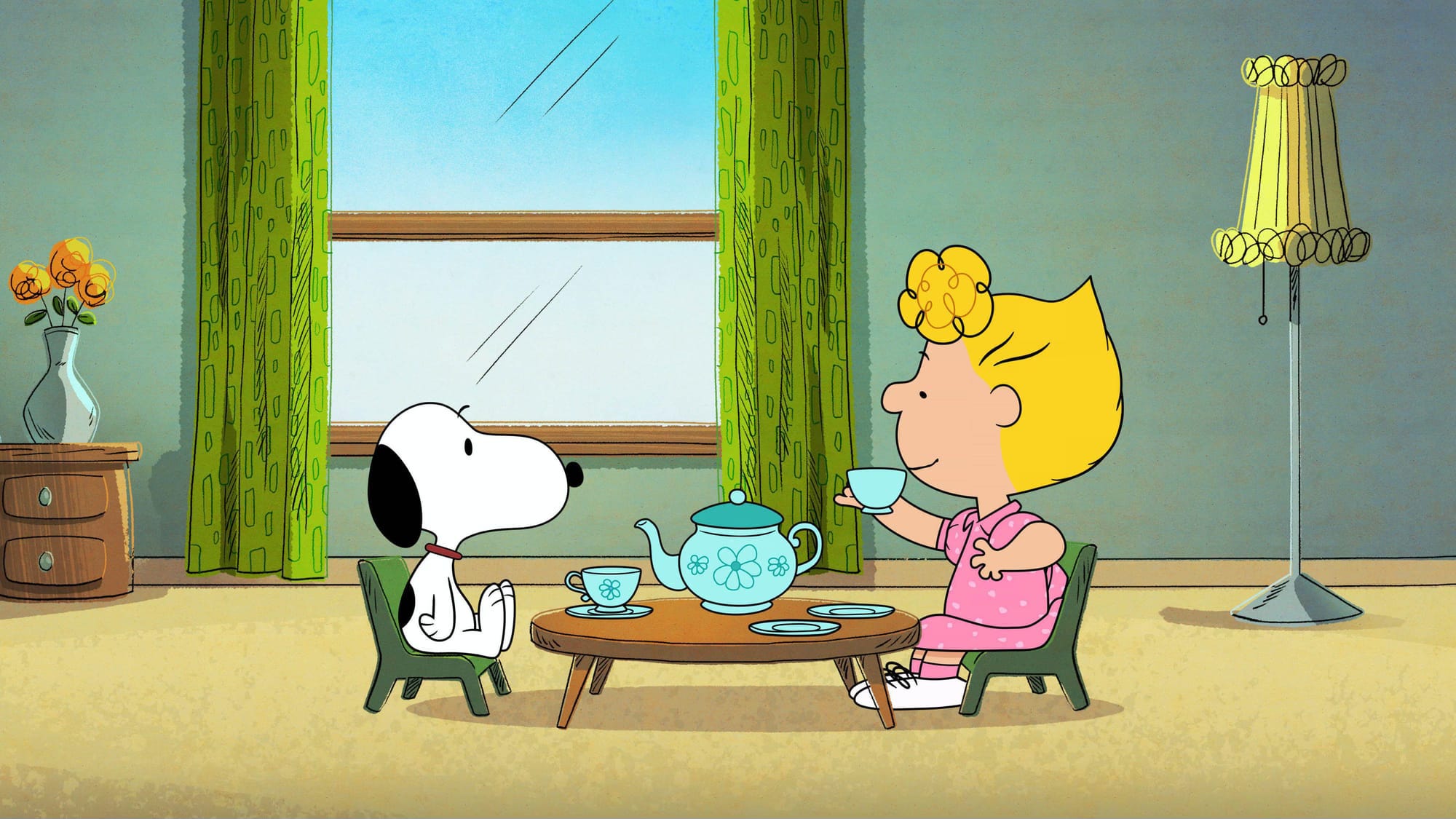
The thirteenth of February 2025 marks the twenty-fifth anniversary of the last printed Peanuts comic strip, a closure which eerily coincided with the death at age seventy-seven of its author, Charles M. Schulz, on the same day. In hindsight, Peanuts was not just another highly successful cultural product but one of the last single-authored cultural products to be internationally successful on a grand scale.
Schulz’s drawn characters—along with their catchphrases like “Good grief!” and “You blockhead!”—have become as immortal as Waiting for Godot’s Vladimir and Estragon, Catch-22’s Yossarian, and Charlie Chaplin’s Tramp. But his real achievement lies not in any single comic strip or character, but in the sheer extent of his fifty-year body of original work. Between October 1950 and December 1999, Schulz drew almost 18,000 unique Peanuts episodes, in addition to innumerable Peanuts posters, calendars, greeting cards, and advertisements. Peanuts is a modern saga, or, as illustrator Ivan Brunetti put it, “an epic poem made up entirely of haikus.” A handful of other twentieth- and twenty-first century works have enjoyed a similar longevity, but few or none of them have stemmed so exclusively from the creativity of one individual, and yet become so familiar, day by day, over a period of five decades.
Peanuts was a popular cartoon for fifty years, from 1950–2000—a period that spanned two English monarchies, five popes, and ten US presidencies—a duration that appears almost inconceivable in our contemporary media environment. There are numerous corporate entertainments that have been around for what feels like forever—e.g. American television’s Saturday Night Live, which premiered in 1975 and still airs weekly in 2025—but these are the exception, and their prominence is generally less the result of their quality than of their marketability as intellectual property, as witnessed by the constant stream of new movies based on J.R.R. Tolkien fantasies, or on superhero adventures first published before World War II. Unlike these works, every new Peanuts strip was generated by Schulz himself, rather than by an army of successors, licensees, and exploiters.

Schulz’s key innovation in Peanuts was not the easy gag of making little kids speak adult language, but his ability to afford deep insights into adult concerns like identity, faith, unrealised dreams, and unrequited love, by distilling them down to the level of little kids. Peanuts offered parables of existential angst and longing, described not through philosophical treatises or spiritual quests, but through small stories about the small affairs of small people. Millions of readers identified with the figures in Schulz’s troupe, seeing the complexities of their own private lives reflected in lives that were outwardly, predictably simple. How many of us have kites that never fly and footballs we have never kicked? How many of us dream of Valentines we’ve never received? Who doesn’t have their own unattainable little red-haired girl?
In his sensitive 2009 biography, Schulz and Peanuts, David Michaelis portrays the cartoonist as an almost pathologically unhappy artist who, despite worldwide fame and a multimillion-dollar annual income, was instinctively attracted to the subjects of loneliness and frustration. Michaelis argues that the brash and bossy Lucy Van Pelt was in some ways a portrait of Schulz’s first wife Joyce, but Michaelis sympathetically recounts Joyce’s hard-luck upbringing and the stubborn practicality it instilled in her, which he sees as very different from her husband’s self-indulgent melancholy. Audiences unmoved by Peanuts may share Joyce and Lucy’s impatience with the endless introspections of Charles Schulz and Charlie Brown.
It’s also true that, while the most memorable Peanuts themes are emotionally complex and sophisticated—Charlie Brown’s chronic insecurities and Lucy’s utter lack of them; Linus’s precocious wisdom counterbalanced by his infantile attachment to a blanket and to the Great Pumpkin; the boundless imagination of a pet dog—a majority of Schulz’s strips rely on basic visual jokes that adhere to the traditional grammar of the comic strip medium. Charlie Brown blasting off the pitcher’s mound by a line drive; Snoopy lying flat on a tent, an igloo, or his owner’s bedstead; Violet confiscating her exact “half” of a snowman; Pig-pen’s personal cloud of dirt: week after week, month after month, year after year, the reassuring slapstick made the intermittent sequences of regret and rejection all the more poignant. Charles Schulz’s moral genius emerged, slowly and subtly, alongside his abilities as a master craftsman.
As graphic design, Peanuts initially stood out in the newspaper pages of its era, with the plain geometry of Charlie Brown’s circular head and zigzag shirt, Lucy’s black blobs and Linus’s thin lines of hair, Schroeder’s musical notations, and the perfect trapezoid of Snoopy’s doghouse. These sparse stylistic choices were imposed on Schulz by space-conscious publishers, but like all great artists, the cartoonist turned these constraints to his advantage. As David Michaelis observes,
Squeezed by administrative fiat away from busily drawn people, the new personalities only became more definite, more intensely themselves, their statements starker. For the more they developed complex powers and appetites while staying faithful to their cut-out, shadow-play simplicity, the easier it would be for Schulz to declare the hard things he was set on saying.
Peanuts’ readily legible lines contrasted with the cluttered frames of older comic strips, and clearly steered the form in the direction of such works as Garfield, Cathy, and Calvin and Hobbes, whose recurring images are as recognisable as national flags or corporate logos.
➜ Read the full article at Quillette.com
Note: Quillette maintains its independence through reader subscriptions. You'll need a subscription to access the complete article.