

Printing the Legend
By Ronald Radosh.

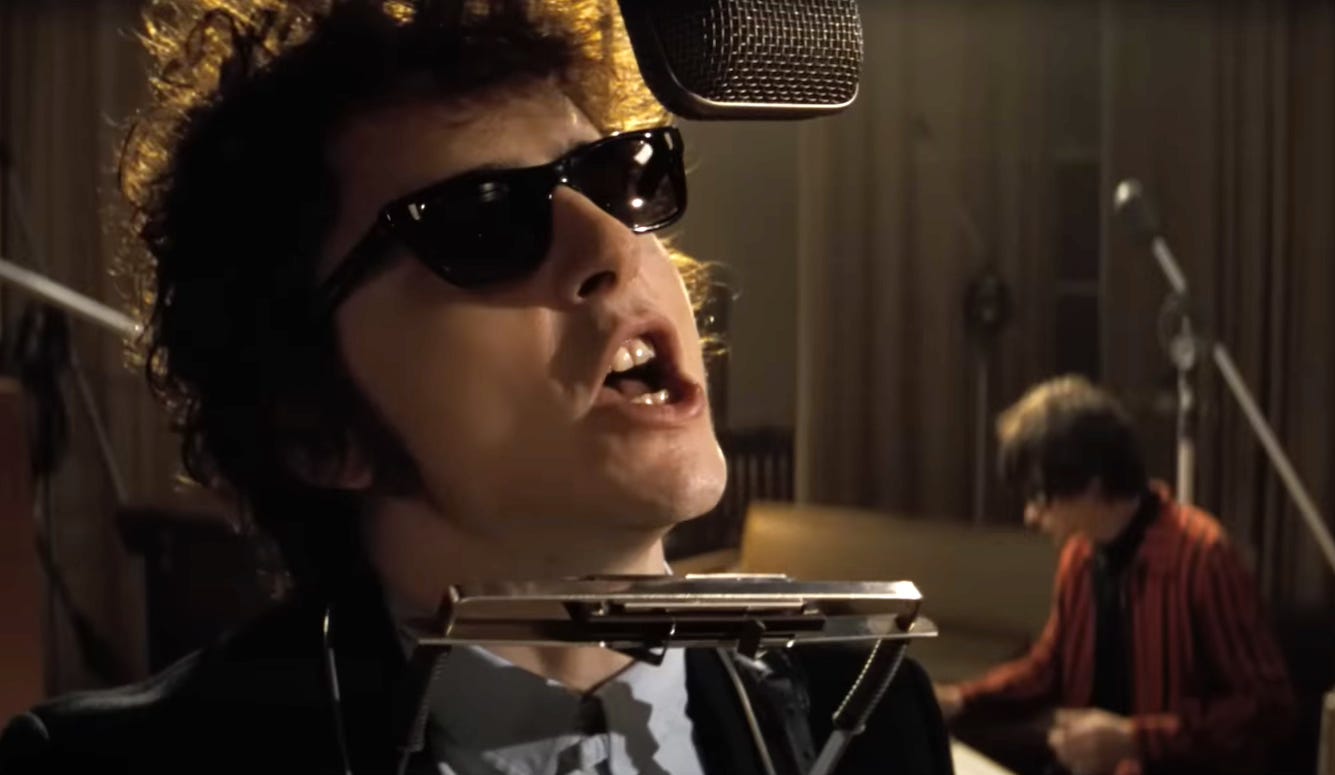
At last, the wait is over. Director James Mangold’s eagerly awaited Bob Dylan biopic A Complete Unknown finally arrived in US theatres on Christmas Day, following special preview screenings at selected IMAX theatres earlier in December. Its release was preceded by a barrage of trailers, clips, and promotional interviews with its stars Timothée Chalamet (Dylan), Edward Norton (Pete Seeger), Monica Barbaro (Joan Baez), and Elle Fanning (who plays a version of Dylan’s first real love, Suze Rotolo, renamed Sylvia Rosso in the film).
The initial critical reception has been somewhat mixed. At the Daily Beast, Nick Schager complains about “the film’s inability to convey anything meaningful about the legendary musician’s inspirations and motivations.” In the Guardian, on the other hand, Peter Bradshaw praisesChalamet’s “amazing bravado” and Mangold’s successful dramatisation “of Dylan’s musical and personal adventures in the first half of the decade as he electrified the world of folk in every sense.”
A recurring gripe, particularly from self-declared Dylan fans, has been that Mangold gets things wrong, that he has omitted key characters, and that he has muddled up the chronology of events. In the January issue of The Atlantic, James Parker accuses Mangold of tossing “twinkling showbiz confetti” over the narrative and predicts that this “fairy tale” approach will make Dylanologists “scream.” Over at The Forward, Gary Lucas grumbles about the lack of “verisimilitude” and calls the film “a candy-colored confection.” He adds:
Against my better judgment, I briefly teared up at the scene where Dylan is initially roundly booed at Newport by his rabid folkie fans for going electric, upending the entire Newport Folk Festival tradition—before he ultimately roars off on his Triumph a la Brando in The Wild One down that Lost Highway where Fate (it is implied) will eventually catch up with him in the form of his infamous Motorcycle Accident. That happened many months later in Woodstock, not Newport—but hey, it’s a biopic, right? And as the phrase from the 1962 John Ford-directed film The Man Who Shot Liberty Valance goes: “When the legend becomes fact, print the legend.”
Well, I am at least as much of a Dylan fan as Lucas, and I am here to tell you that he and the other naysayers are dead wrong about Mangold’s film. Yes, there are the usual liberties with the record that films like this one always take for dramatic or ideological purposes (more about which in a moment), but the film makes no pretence of historical accuracy. What it offers instead is a transportive reimagining of a revolutionary era, and critics who have accepted this have tended to enjoy the film on its own terms.
➜ Read the full article at Quillette.com
Note: Quillette maintains its independence through reader subscriptions. You'll need a subscription to access the complete article.