

Something I Need
By Dave Thompson.

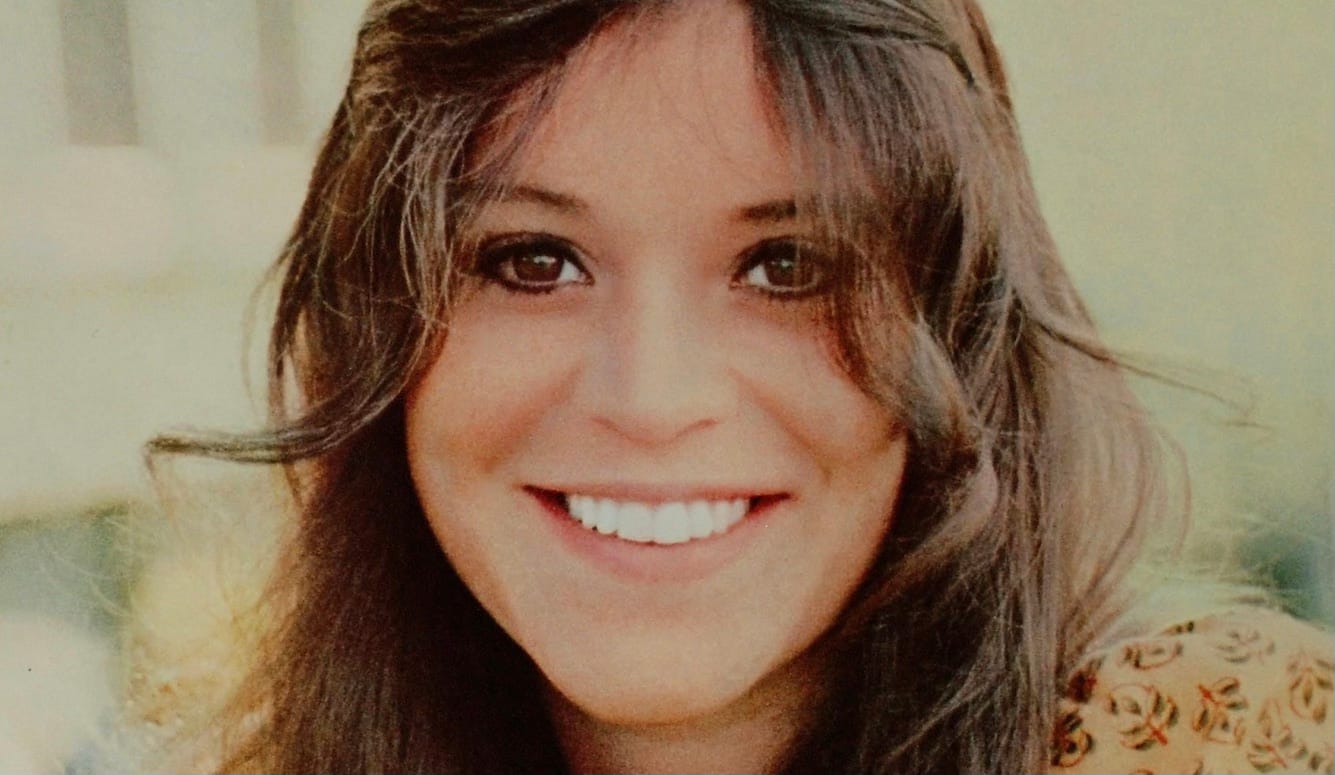
It was David Bowie who said that it doesn’t matter who does something first, it’s whoever does it second that history remembers. Bowie was specifically answering the charge that he had lifted his act from then-obscure bands like the Velvets and the Stooges. But he wasn’t wrong about the general principle. Indeed, we were provided with an example of Bowie’s rule of thumb just a few months ago, when Rolling Stone reviewed the omnibus sized box-set of Bob Dylan’s 1974 US tour.
As Melanie Safka wrapped up her performance on the first day of the 1969 Woodstock music festival, audience members raised burning candles, producing a sea of flickering lights across the fields of Yasgur’s Farm in upstate New York. It was the first recorded instance of a practice that would become a convention at concerts. Melanie later wrote a song about the experience called “Lay Down (Candles in the Rain)” (it was pouring at the time), for which she was rewarded with her first US hit single. MTV interviewed her about the phenomenon in 2004. It even gets a mention on Wikipedia. All of which seems quite incontrovertible, yes?
But last fall, Rolling Stone reported that the “live music tradition” of “fans hoisting live flames—and illuminated cellphones—aloft at shows” began at a Dylan show five years later. History is written by the winners. Everyone knows who Bob Dylan is. But who remembers Melanie today?
I first contacted her towards the end of lockdown. I’d been listening to Melanie’s music since the early 1970s, but we’d never met. I got in touch to ask if she’d be willing to give me an interview for a book I was writing about the Child Ballads. Her middle child was named after one of them, after all, so I thought she might have some stories to tell. We got along well, became friends, and I started acting as her unofficial manager. Whenever I found a suitable opportunity for her, I would make a call. A licensing deal here, a new record contract there, a new album in the works, a short US tour on the horizon.
Then she passed away, completely unexpectedly, on 23 January 2024. That was the first time in many years that that her name had appeared in the headlines, and a usually indifferent media suddenly flocked to remember her. It had been half a century since Melanie—one of those performers who never bothered with a surname—could rightfully claim to be among the most successful performers in rock, and one of the most photographed women in the world. And it all began before anyone had even heard of Yasgur’s Farm.
Melanie released her first single, “Beautiful People,” in 1967, and her career was already two albums old by the time she appeared at Woodstock. She quickly racked up a handful of hits around Europe (1968’s “BoBo’s Party” was a French #1), performed at the Paris Olympia and the Queen Elizabeth Hall in London, and was the subject of a thirty-minute documentary broadcast on British television.
Melanie’s American fame was slower to arrive, and largely predicated on her Woodstock appearance and its luminescent aftermath. (“I only got to play that afternoon,” she liked to joke, “because the Incredible String Band didn’t want their equipment to get wet.”) The accolades began to pile up and her profile rose accordingly. She gave concerts at the Metropolitan Opera and in Carnegie Hall. She became first solo performer to land three simultaneous singles on the Billboard chart, and the first female singer-songwriter to top that chart (with “Brand New Key” in 1971) since country singer Bobbie Gentry (“Ode to Billie Joe”) in 1967. She was also the first solo rock performer to launch their own record label, Neighborhood Records, in 1971.
Nor was Melanie’s acclaim restricted to the world of pop music. Indeed, until “Brand New Key” completely (and, if you listen to the lyrics, undeservedly) rerouted her reputation into the realm of bubblegum novelty, she was just as beloved by the underground as she was by the mainstream. More so, in fact, as she proved with her now-legendary performances at the Isle of Wight Festival in 1970—sandwiched between The Who and Sly & The Family Stone—and at Glastonbury Fayre the following year.
➜ Read the full article at Quillette.com
Note: Quillette maintains its independence through reader subscriptions. You'll need a subscription to access the complete article.