

Sudan Between Two Middle Easts
Between the jihad of the “Hamas of Africa” and the new order of the Abraham Accords, the choice in Sudan should be clear.

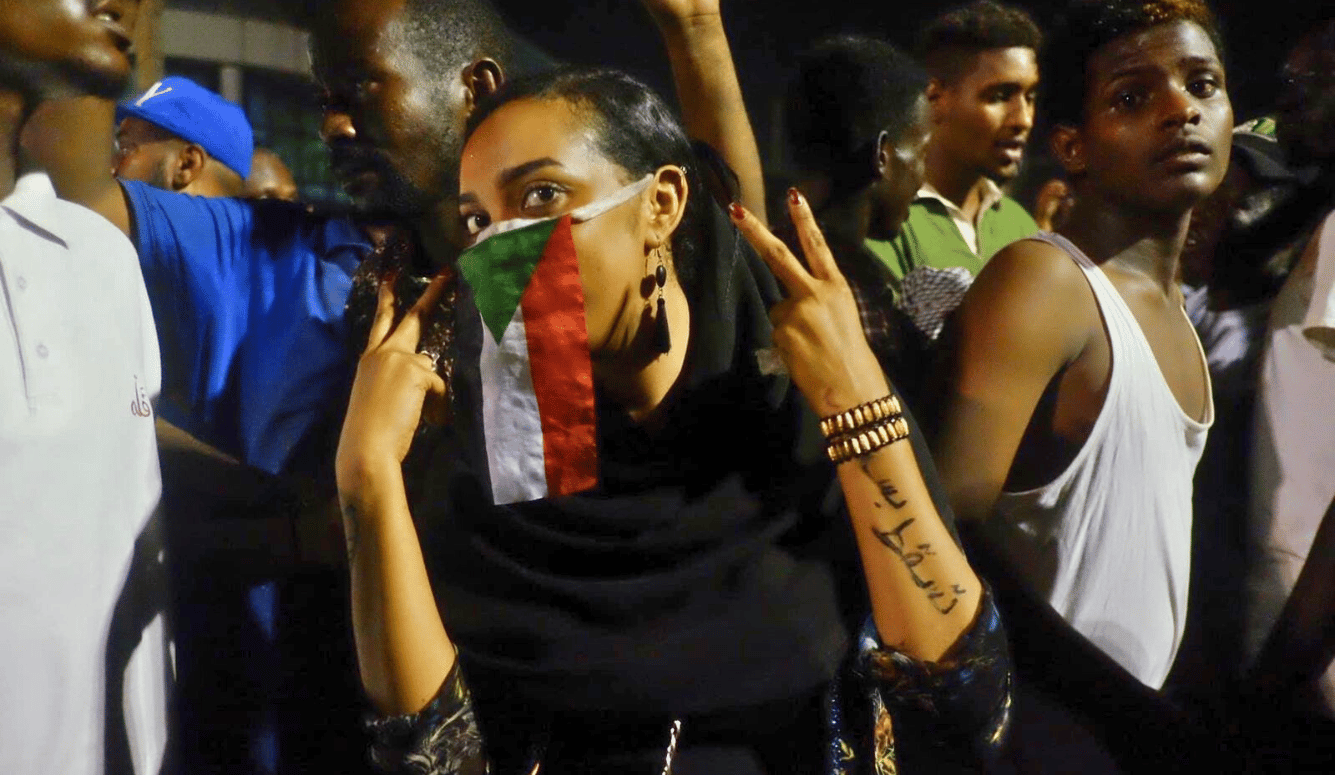
The war in Sudan is not just another failed revolution, it is the fault line between two Middle Easts. On one side stands the rejectionist order consecrated in the “Three Nos” of the 1967 Khartoum Conference, flatly refusing peace with Israel, recognition of Israel, and negotiations with Israel. On the other side stands the imperfect experiment of the Abraham Accords, where Arab states normalise Jewish sovereignty, pluralism, and the unromantic work of state-building instead of worshipping “resistance.” This is why Sudan’s civil war cannot be reduced to a quarrel between “competing generals.” It is a struggle over whether the post-Islamist civic opening that briefly existed in 2019 will be buried for good or whether Sudan will be allowed to create a moderate order, divorced from the Muslim Brotherhood and at peace with Jews and its own persecuted communities.
The most efficient weapon in this struggle is narrative. A Qatar-aligned media ecosystem has repackaged Sudan for Western consumption as a morality play in which the United Arab Emirates is cast as a genocidal neocolonialist state—a “new Israel” for the same “progressive” audience—while the Islamist infrastructure embedded in Sudan’s security apparatus slips out of frame. The strategic reality, however, looks very different. Iran has restored relations with Khartoum, and Reuters reports that Iranian drones are assisting the Sudanese army’s campaign around the capital.
This is how Islamists return: by fogging the West while they wage war in the East. The campaign against Abu Dhabi, cast as the master culprit in Qatar’s version of events, does not illuminate Sudan’s catastrophe, it obscures it, laundering the forces that strangled the transition, erasing Sudan’s own Arab Islamist colonial hierarchy, and hardening the region’s addiction to permanent war just as denazification and regional integration begin to look possible.
I. Massacre, Marriage, and the Brief Birth of a Civic Sudan
In late June 2019, I landed at Heathrow and was met by my then-husband, a British Sudanese oil-and-gas lawyer who had reinvented himself as a revolutionary. “There is something I must tell you,” he had said earlier that week, “but I cannot share it over the phone.” He had just filed a petition with the International Criminal Court calling for an investigation into the Khartoum massacre. On 3 June 2019, in the pre-dawn hours of Eid al Fitr, the holiday celebrating the end of Ramadan, Sudanese security forces stormed a peaceful sit-in. A couple of hundred people were killed, women were raped, and bodies were dumped in the Nile. The sit-in had been the beating heart of a new, hopeful Sudan. It was met with bloodshed.
The petition went viral and journalists began calling our Shoreditch hotel room. My ex-husband was intoxicated by the idea that he might have a role in the revolution. Like many “progressives” in 2019, he had flown into Khartoum for a weekend, taken selfies at the protest site, and returned home a self-anointed leader of the people. He sat me on the edge of the bed. “There is a transitional plan,” he said. “My name is on a list presented by the Sudanese Professionals Association as a possible technocratic head of state, at least for an interim period. Are you in?” I asked him if he was insane. “They will murder you,” I replied, “and they will rape me before they kill me.” The Sudanese deep state was not about to abandon its theocratic project because a few lawyers drafted a road map and some Ivy-educated men imagined themselves to be the midwives of a new democracy.

 | A guest post by
|