

The Edifice Complex
Monuments don’t create legacy; they merely memorialise it.

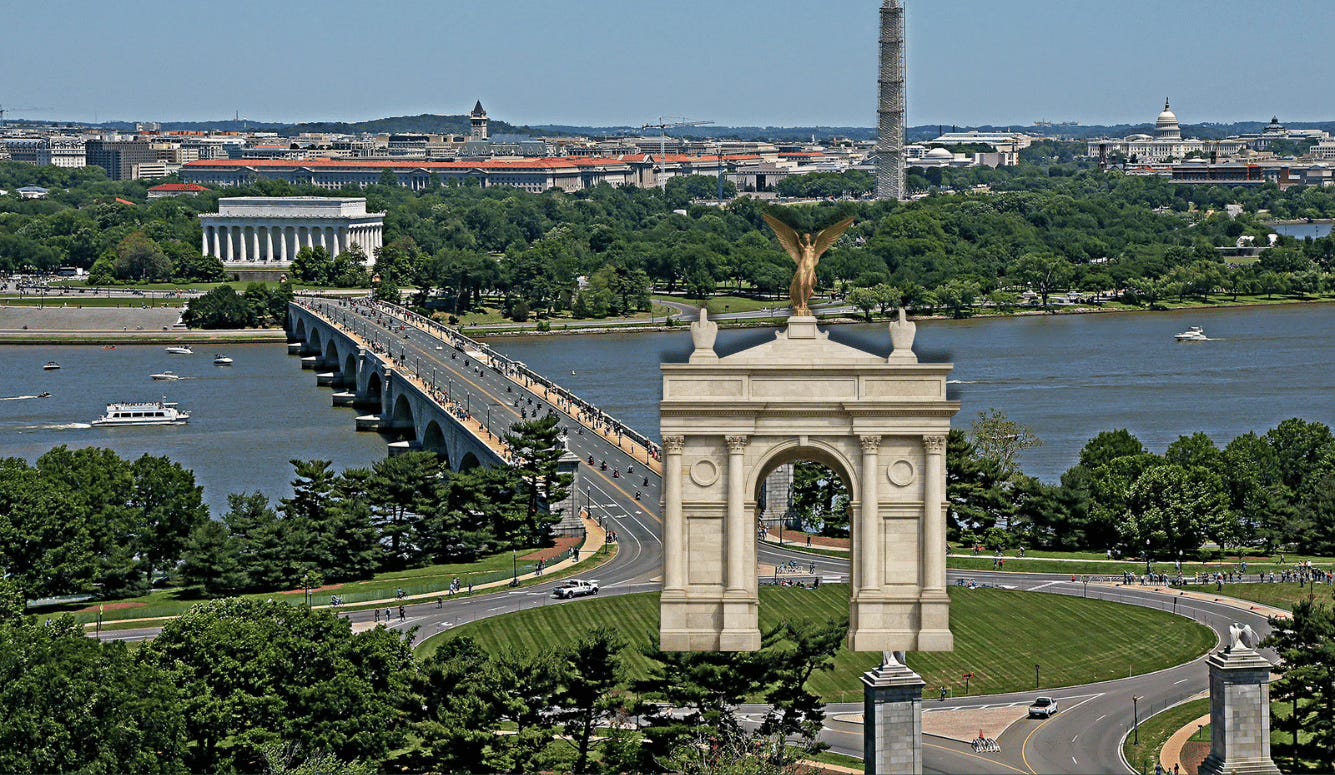
Louis XIV transformed Versailles from a hunting lodge into a palace so vast it consumed France’s treasury. Stalin demolished Moscow’s Cathedral of Christ the Saviour to make way for a never-realised Palace of the Soviets that would have dwarfed the Empire State Building. Nicolae Ceaușescu razed a fifth of historic Bucharest to construct his Palace of the Parliament, the world’s heaviest building. Saparmurat Niyazov erected a gold-plated rotating statue of himself in Turkmenistan’s capital, thereby ensuring that his face would always be turned towards the sun. And in 2025, Donald Trump tore down the East Wing of the White House to make way for a gilded ballroom. This year, he announced a renovation of the now-renamed Trump-Kennedy Center and the construction of a 250-foot triumphal arch on the National Mall that would dwarf the Lincoln Memorial.
These disparate projects share a common psychological origin in what might be called an “edifice complex,” which emerges when individuals in positions of authority, uncertain of their place in history, attempt to pre-empt posterity’s judgment with grandiose construction projects. It reflects insecurity and egomania in equal measure; the psychological need to command remembrance through scale when substance might not suffice.
This syndrome appears across contexts: autocrats who construct new capital cities, monarchs who build palaces that dwarf their subjects, university administrators who prioritise signature buildings over academic programmes. But it reveals itself most clearly in leaders who fundamentally misunderstand how history works: monuments don’t create legacy; they merely memorialise it. For those afflicted, however, the physical permanence of buildings offers psychological comfort that achievements cannot provide.
Trump’s recent proposals aren’t responses to genuine infrastructural needs but programmatic attempts to physically alter Washington’s symbolic landscape. They reveal a leader building not because buildings are needed, but because the builder needs them. He needs their permanence to counter fears of historical erasure. He needs their visibility to compensate for substantive achievement. He needs their monumentality to literalise an internal sense of importance that external validation has inadequately confirmed.

 | A guest post by
|