

The Good War No More
Jon Lee Anderson’s powerful new book on Afghanistan reminds us that the justness of a cause is no guarantee of its success.

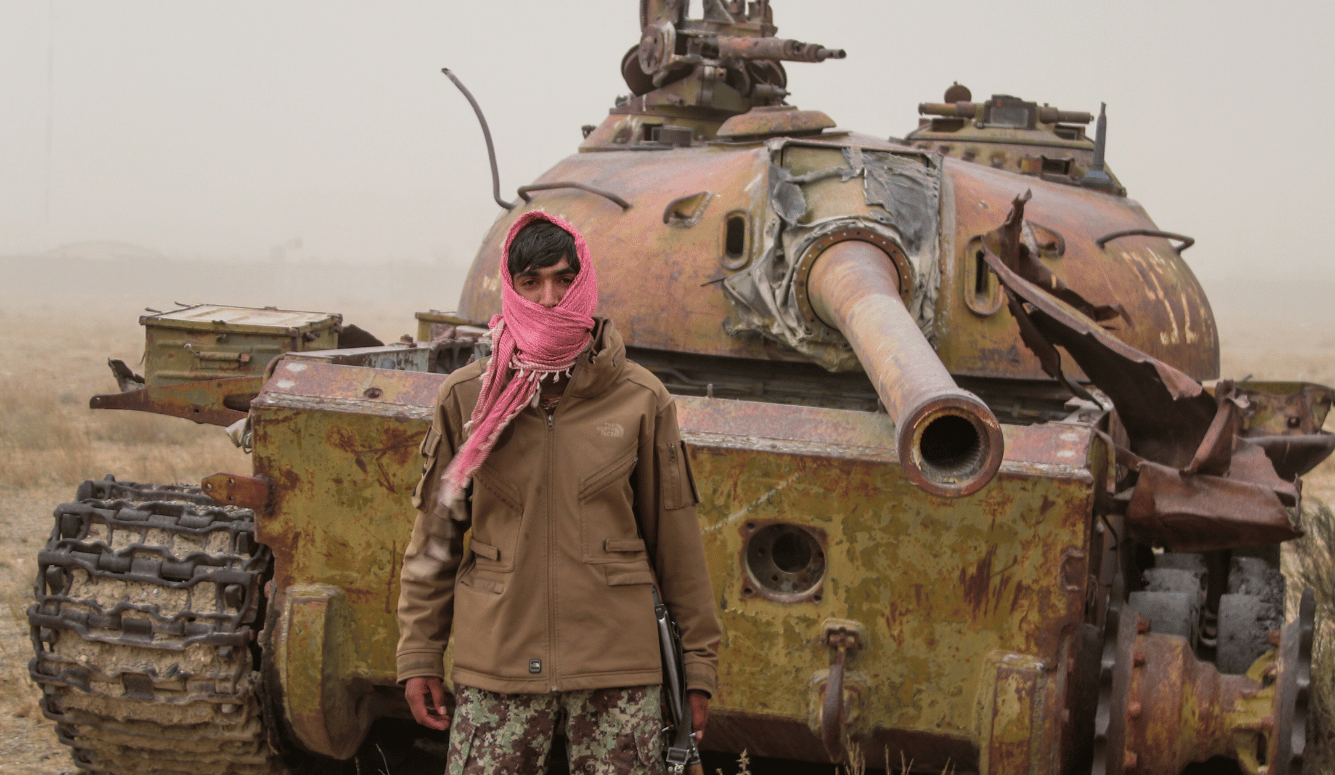
A review of To Lose a War: The Fall and Rise of the Taliban by Jon Lee Anderson, 400 pages, Penguin Press (August 2025)
Back in October 2001, in the first week of the war in Afghanistan, a British newspaper reporter spoke to a Taliban fighter on the Pakistani border. The young jihadist was full of bluster. The Americans, he said, would never win, because “they love Pepsi-Cola, but we love death.” This, it turned out, was no idle boast. In 2021, the Americans decided they’d had enough and the medieval Islamists are now back in power in Kabul reaping the dividends of patience.
The justice of the war in Afghanistan was never in doubt: the Taliban regime was harbouring Osama bin Laden and his confederates, and from that territory they had planned and carried out the terrorist attacks on New York and Washington on 11 September 2001. Very few people disagreed that extirpating the Taliban and their al Qaeda guests was justified or that this would constitute an act of deliverance for the benighted Afghan people, not least the female half compelled to live as chattel.
But the justness of a cause is no guarantee of its success, and twenty years later, the war ended in an ignominious withdrawal executed by President Joe Biden but set in motion by President Donald Trump the year before. The lives and money sacrificed in this prolonged intervention were hardly trivial: 2,500 US troops lost their lives, thousands more were wounded, and the cost to the American taxpayer is estimated to have run above US$2 trillion. This is what it took To Lose a War, as Jon Lee Anderson titles his powerful new book. Its subtitle, The Fall and Rise of the Taliban, offers a poignant reminder of hard-won gains carelessly frittered away.
As soon as US forces deployed to Afghanistan in October 2001, they found themselves reinforced by indigenous fighters of the United Islamic Front for the Salvation of Afghanistan (better known the Northern Alliance). Together, they defeated the Taliban—a cadre of pious “students” who had established a sharia state in 1996 with Saudi funding and support from sections of Pakistan’s intelligence services—only to surrender the country back to them two decades later. Back in power, the Taliban is reverting to type, maintaining strict religious law to restore purity and virtue to the land.
Anderson is a seasoned correspondent for the New Yorker who cut his teeth reporting on Afghanistan in the late 1980s when the Red Army was laid low by the mujahideen, an alliance of tribal warlords and Islamist guerrillas whose martial élan—and advanced Western weaponry—wrecked the Soviet occupation. “Afghanistan has always been more of a battleground of history than it has been a nation,” Anderson writes, and the Soviets were only the latest in a long line of foreign invaders to bleed grievously there.

 | A guest post by
|