



Written by Joel Kotkin and Wendell Cox, read by William Laing.
This video essay written by demographers Joel Kotkin and Wendell Cox examines the political, economic, and demographic consequences of the contemporary housing crisis in high-income democracies. They argue that escalating house prices, restrictive land-use regulation, and the growing role of institutional capital in residential property are steadily eroding one of the material foundations of democratic society: dispersed property ownership.
Drawing on historical comparisons, economic data, and urban-planning research, the essay contends that policies favouring density and containment—often justified on environmental or social grounds—have instead produced a new form of dependency. Younger generations are increasingly confined to long-term renting, with diminished prospects for family formation, financial security, and political independence. The result, the authors suggest, resembles a modern form of serfdom, not imposed by aristocracy or the state alone, but by a convergence of regulatory regimes and financial power.
The video situates today’s housing affordability crisis within broader trends in suburbanisation, remote work, and demographic decline, arguing that housing policy is no longer merely an economic issue, but one that may shape the future of democratic self-government itself.
Transcript
Land ownership has shaped civilizations from their beginnings, with a constant interplay between great powers—the aristocracy, the state, the Church, the emperor—and those below them. History has oscillated between periods of greater dispersion of ownership, and those that favored greater concentration. Today, we live in an era of ever-greater consolidation, not from knights in armor, or Communist cadres, but from the forces of big capital and an ever-more intrusive regulatory state. The result has been record-high housing prices, well above the increase in incomes resulting in a systematic decline in the ability of people, particularly the young, to buy their own house as prices rise even in less expensive areas. Supply also faces great constraints, due in part to labor and supply-chain woes and the demand shock of the pandemic and remote work. Unless reversed, young people will be forced into a lifetime of rental serfdom. The assets that drove middle-class stability, wider social benefit, and subsidized comfortable retirements, will likely not be available to them. Property remains key to financial security: Homeowners have a median net worth more than 40 times that of renters, according to the Census Bureau. Shoving prospective homeowners into the rental market not only depresses their ambitions, but it also forces up rents, which hurts poorer households and even solid minority neighborhoods. But this impacts far more than just finances.
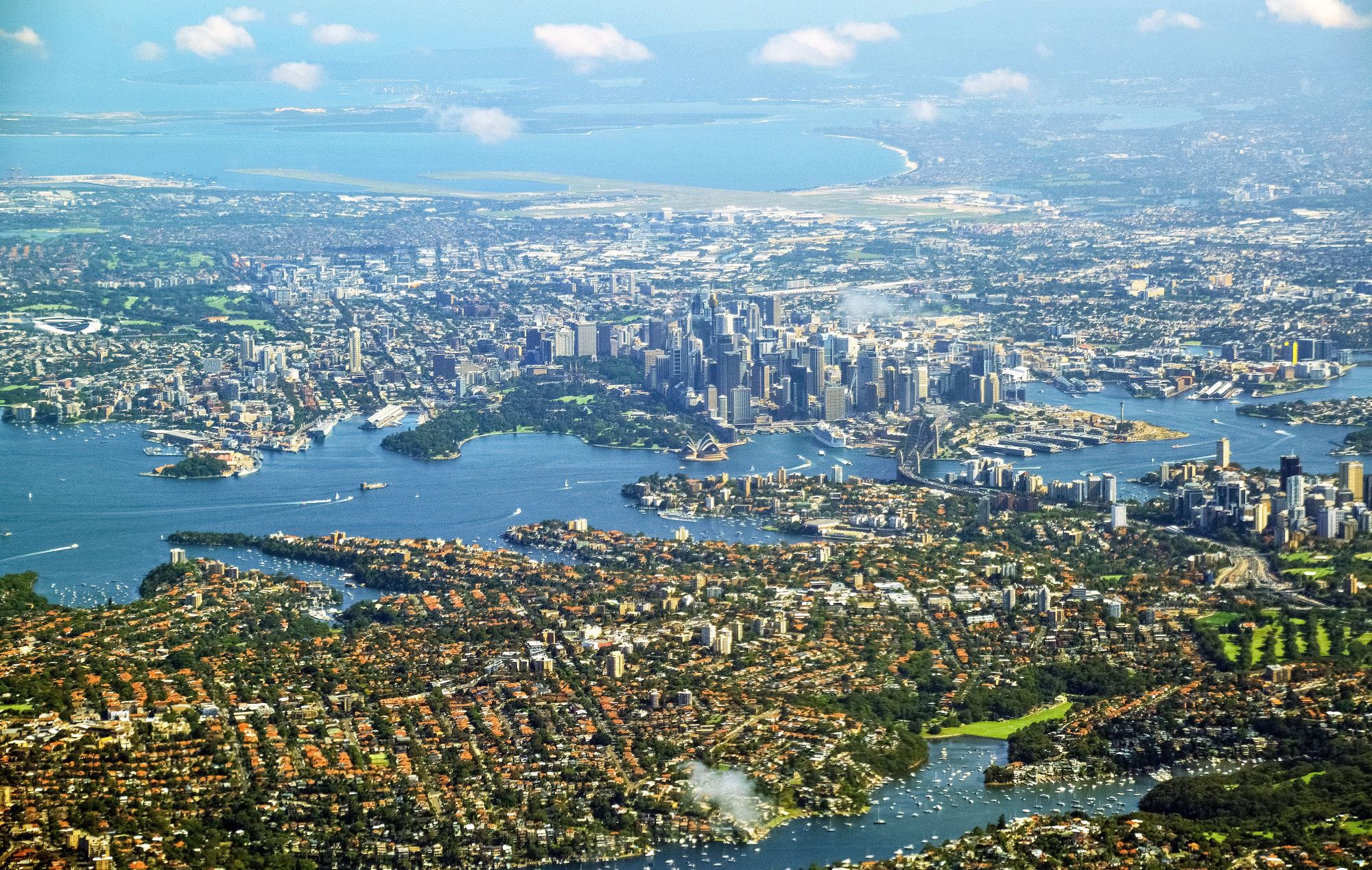
Low affordability and high rents tend to depress the fertility rate, contributing to what is rapidly becoming a demographic implosion in many countries. More important still, dispersed property ownership has long been intimately tied to democracy while concentration tends to characterize autocracies, whether of the state-dominated variety or that of big capital. How we reverted to a feudalistic state is a complex and infuriating story. Critical to this change has been a planning theology that holds density itself as intrinsically good and that purposely seeks to block housing on the periphery for societal, and environmental reasons. Where implemented, this approach has driven up prices, as evident in places like Sydney, Vancouver, San Francisco, London, and Paris. This has been a boon to speculators and well-heeled developers, but makes middle-class housing unaffordable to the middle class and intensifies the poverty of poorer residents. The “pack and stack” planning “vision” has been widely adopted, even in land-rich countries like Australia. This ad from the New South Wales government promises an urban paradise of sorts: This, as many Sydney-siders will tell you, is not exactly what happened. Instead of flocking to the city, research by the Massachusetts Institute of Technology/Queens University (Canada) estimates that nearly 80 percent of Australia’s metropolitan population lives in automobile-oriented suburbs or exurbs.


