


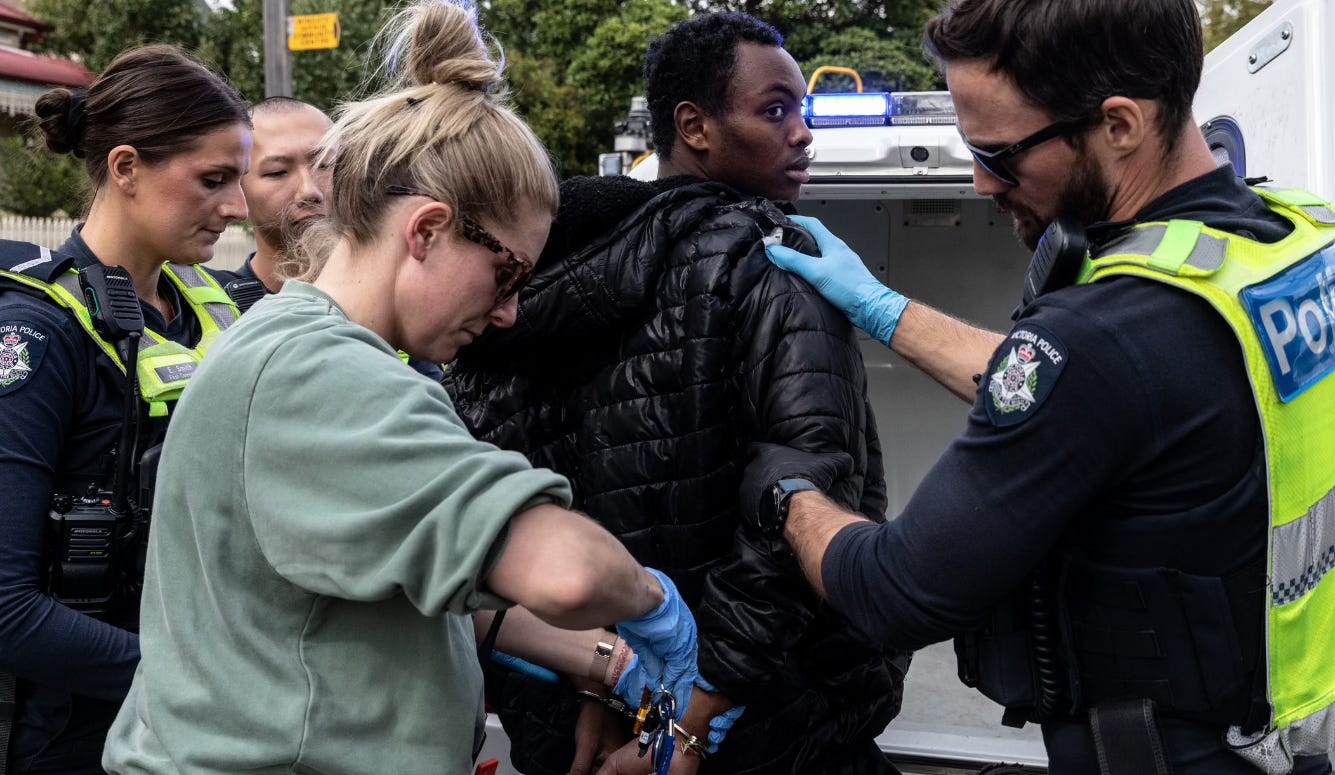
On 6 September 2025, two boys aged twelve and fifteen were walking home from basketball practice in Cobblebank, an outer suburb of Melbourne, when they were chased and set upon by a group of assailants who then hacked them to death with machetes. Seven teenagers have since been arrested and charged with murder. This double murder has become a flashpoint in the city’s ongoing crimewave. A surge in violent crime and property crime is afflicting the city, still regularly (but less credibly) listed among the world’s most liveable.
The youth of the victims and the alleged attackers, their shared Sudanese background, and the possibility that the violence is gang-related have raised inevitable questions about youth offending, policing, and multiculturalism. Reports that the arrestees include a young man photographed just months earlier, brandishing a machete at a suburban shopping mall, have reignited the debate about Victoria’s bail laws and precipitated a ban on machetes. Large bins have been placed across the city in the hope that budding duellists will voluntarily surrender their weapons.
The Melbourne crimewave is the most visible manifestation of endemic disorder created by Victoria’s longstanding Labor government, which has been in power for all but four years since 1999. A city that endured the world’s longest COVID lockdowns is now beset by crime, largely because changes to the criminal-justice system have paid more attention to the interests of offenders than to those of victims or the law-abiding public.
At the same time, the city is straining under infrastructure and cost-of-living pressures driven by incessant immigration (its population has grown by more than 350,000 since the pandemic) and a productivity collapse due in part to COVID-era excesses. Unpacking and resolving Melbourne’s crimewave, then, requires a fuller understanding of the decline of the city.

