

Universities Are Worth Saving
Those seeking to address the crisis on America’s campuses should resist the tendency toward nihilism—the temptation to conclude that we need to just (metaphorically) burn



If you ask most Americans where knowledge comes from, they will probably say: the marketplace of ideas. This is a concept that goes back to English philosopher John Stuart Mill (1806–73) in theoretical terms; and was first enunciated in its modern form by US Supreme Court Justice Oliver Wendell Holmes Jr. in his dissent in the 1919 case of Abrams v. United States: “The best test of truth is the power of the thought to get itself accepted in the competition of the market.”
The marketplace of ideas is a great metaphor. But it turns out to be incomplete for reasons that have to do with the cognitive and social shortcomings of human beings. If you simply put people in a free-speech environment without any rules, guidelines, norms, institutions, or guardrails, you get a cacophony of voices, including trolling, tribalism, rabbit holes, conspiracy theories—in other words, chaos.
In order to create knowledge, on the other hand, you need something that goes beyond Mill and his marketplace. You need James Madison, the father of the US Constitution, and, in my opinion, the greatest political genius who ever lived. In the 1780s, Madison is the key figure, along with George Washington, who understood quickly that the Declaration of Independence was an inadequate basis to run a country.
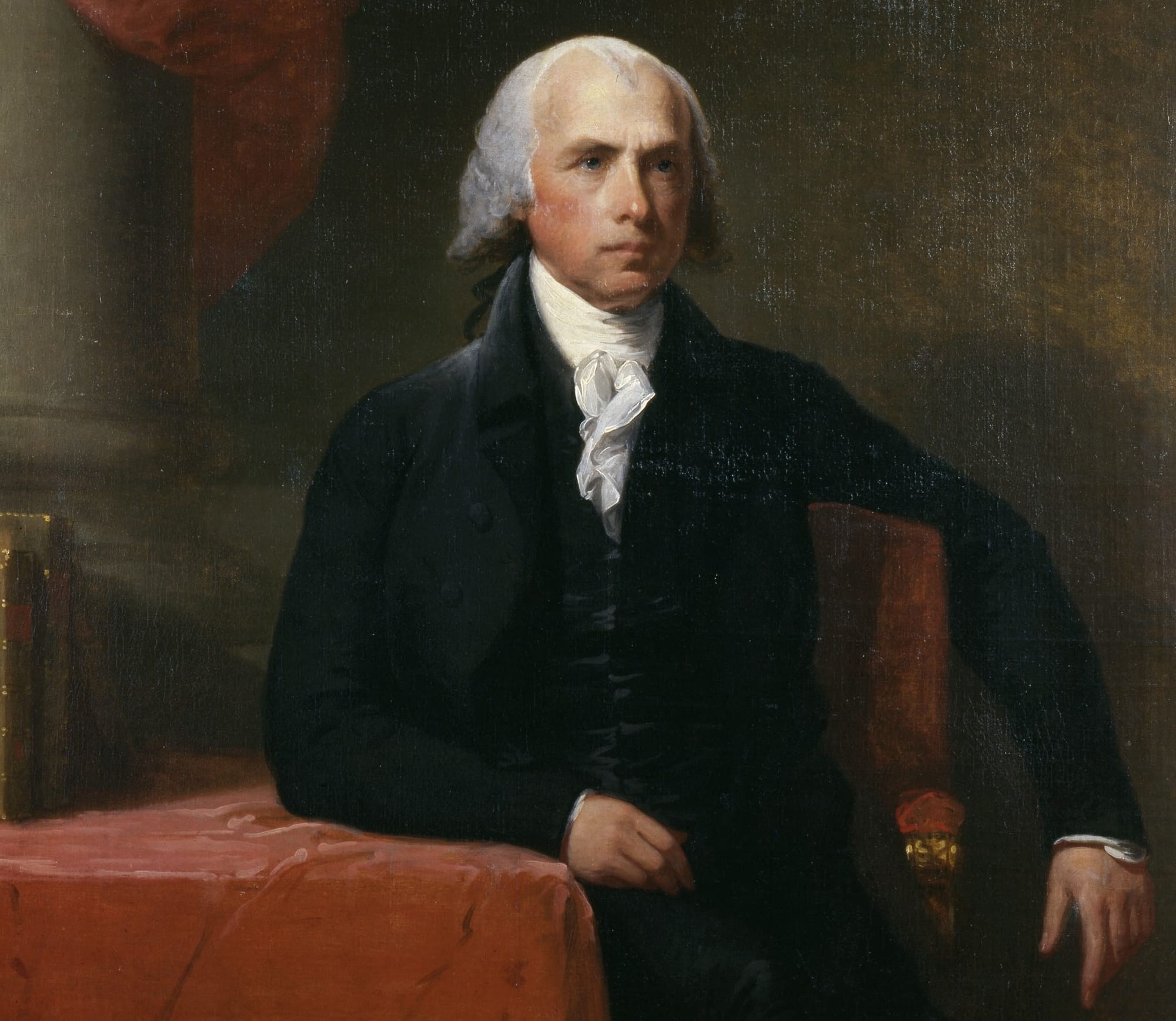
The Declaration is a grand statement of principles relating to freedom and human equality. What it does not do is establish a structure for governing the independent United States of America. Within only a couple of years, in fact, America’s initial Articles of Confederation dissolved amid the squabbling that broke out among states, which began to inflate their currencies and get into trade wars. As a result, Madison came to understand that you need something more: you need a Constitution.
It turns out that you need exactly the same thing in the world of knowledge that you do in the world of governance: a Constitution of Knowledge. This is not a metaphor, an analogy, a simile, or a figure of speech. It’s an actual thing. You can go and read it.
It’s not in just one place, like the US Constitution, but you’ll find it in places such as the American Association of University Professors’ Redbook, the Code of Ethics developed by the American Society of Newspaper Editors (who now self-describe as News Leaders), and in similar guidelines and protocols developed by other professional, academic, and scientific societies. These are the rules, the norms, and the institutions that structure our public conversations so that they lead us toward truth and away from ignorance, conflict, and oppression.
The key word there is structure. You must have structure for these conversations—or, as famed social psychologist Jonathan Haidt puts it, settings. You need to have the social settings right in order to get the right kinds of conversations and disputations.
As I discuss in my 2021 book, The Constitution of Knowledge: A Defense of Truth, these two constitutions parallel each other—one in the political sphere, one in the epistemic sphere. They are both about settling disagreements, and turning those disagreements into consensus. And they operate on similar principles.
For example, no final say. There’s no last election. There’s no last experiment. The status quo is always subject to change. And that prevents any person or faction from becoming enshrined permanently.
➜ Read the full article at Quillette.com
Note: Quillette maintains its independence through reader subscriptions. You'll need a subscription to access the complete article.
 | A guest post by
|
No. I’m afraid they are not worth saving. And I’m not saying this from some current political or ideological perspective. I’ve felt this way for decades. When I worked as a college professor, I quickly came to understand the game of using student loans to pay enormous salaries to administrators while actual instructors struggled to get by. As a graduate of two University of California schools, I also came to understand how student fees (financed by oppressive loans) were being used simply to empower and enrich administration.
There’s no way to fix this. It runs too deep. And there are too many competing ways to learn valuable skills and obtain critical knowledge.